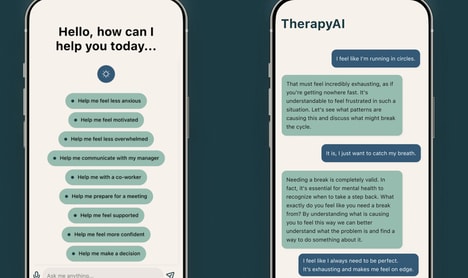
Slingshot AI has introduced Ash, a groundbreaking artificial intelligence platform specifically engineered to deliver therapeutic mental health support through a mobile application. Developed over 18 months with input from 50,000 beta testers, this free iOS and Android app represents a significant advancement in digital mental health solutions as it utilizes a proprietary psychological foundation model rather than generic conversational AI.
Slingshot AI's Ash system was trained through a multi-phase process that involved extensive behavioral health datasets, clinical refinement by mental health professionals, and reinforcement learning to personalize interactions. The innovation aims to address systemic gaps in mental healthcare accessibility by providing evidence-based therapeutic techniques — including CBT, DBT, and motivational interviewing — through an AI interface capable of adapting responses to users' immediate needs and long-term progress.
Image Credit: Slingshot AI
Key Themes Behind This Trend
- AI-driven Therapy
- The integration of artificial intelligence in therapy provides scalable, personalized mental health care that traditional human-only models struggle to achieve.
- Personalized Digital Health Apps
- Advanced digital health applications like Ash offer tailored mental health support, revolutionizing patient engagement and outcomes.
- Behavioral Health Tech Advancements
- Enhancements in behavioral health technology are bridging the accessibility gap by delivering sophisticated mental health support directly through mobile platforms.
Where This Applies
- Digital Health
- The digital health industry is transformed by AI applications that enhance patient care through innovative, mobile-based solutions.
- AI Technology
- Harnessing AI technology in mental health care showcases the potential for intelligent systems to personalize therapeutic interactions effectively.
- Mental Healthcare
- The mental healthcare sector is evolving with AI tools that democratize access to evidence-based therapeutic practices, improving long-term patient outcomes.