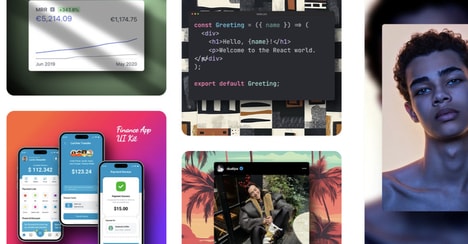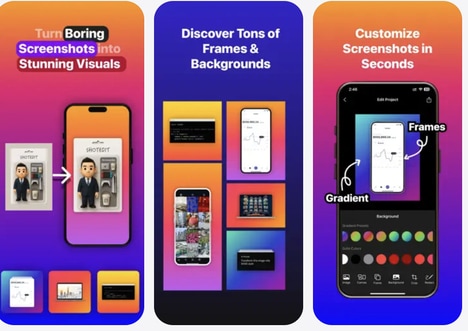
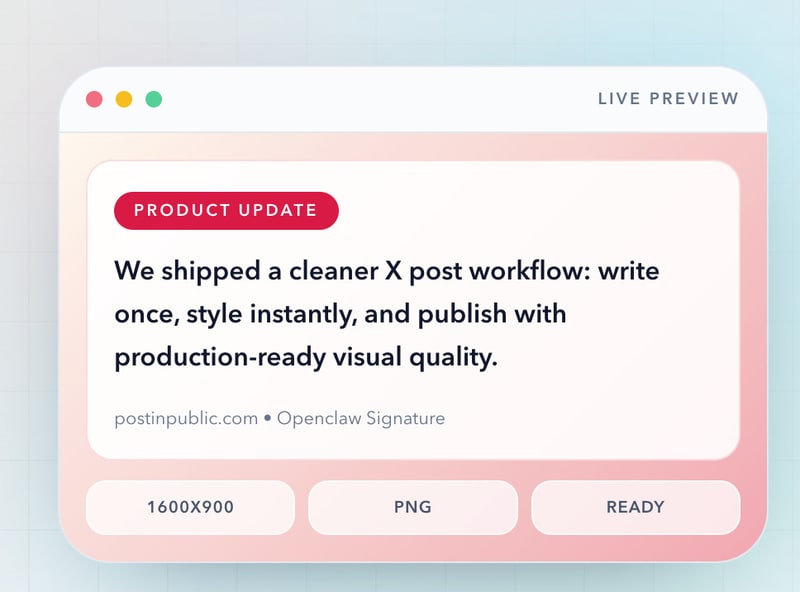
Post in Public is a design-focused tool built for creators participating in the “build in public” movement. It enables users to transform raw screenshots into visually enhanced content suitable for sharing on social media and other public platforms.
The tool offers styling options such as soft gradients, clean color schemes, and illustrative aesthetics inspired by various design trends. Its primary function is to improve the presentation quality of development updates, product progress, and personal projects, making them more engaging and visually consistent. By simplifying the process of turning basic screenshots into polished visuals, it reduces the need for advanced design skills or external software. For entrepreneurs, indie developers, and content creators, Post in Public supports more effective storytelling and audience engagement by improving how work-in-progress updates are visually communicated online.
Image Credit: Post In Public
What's Driving This Trend
- Design-first Screenshot Tools
- There is potential for tools that automatically convert raw app or screen captures into branded, publication-ready visuals that streamline creator workflows.
- Build-in-public Content Styling
- A wave of styling frameworks tailored to 'build in public' narratives could standardize how progress updates are visualized across developer and maker communities.
- No-code Visual Storytelling
- Simplified interfaces that enable non-designers to craft layered, narrative-driven posts could reshape how project stories are communicated on social channels.
Who This Affects Most
- Social Media Platforms
- Platforms that integrate native styling and templating for progress updates could alter engagement dynamics by prioritizing polished, shareable development content.
- Saas Design Tools
- Design software vendors offering lightweight, screenshot-focused modules could disrupt traditional design workflows by reducing reliance on specialist skills and heavyweight applications.
- Creator Economy Platforms
- Marketplaces and membership services that bundle visual-authoring capabilities with monetization features could change creator monetization models through richer presentation of work-in-progress.