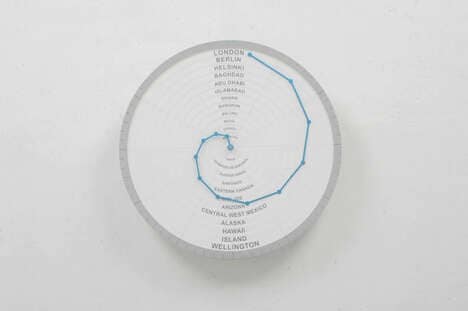
February 29, 2009 will be the longest day since 1992. The reason for this lingering day is an adjustment that must be made to the world’s clocks in order to account for the earth’s slowing rotation. Such adjustments aren’t anything new. 34 adjustments have been made since 1972. The U.S. Naval Observatory in Washington, D.C., will take care of the atomic clocks under their charge with a party at 6:59:60 p.m., the moment when the second will be made official.
Unlike the first atomic clock of 1949, (see gallery,) modern atomic clocks depend upon very precise readings from space as the video above explains.
What Makes This Trend Stand Out
- Precision Timekeeping
- Opportunity for companies to develop and improve atomic clocks to ensure accurate timekeeping.
- Space-based Technology
- Innovation opportunities exist in enhancing space-based technology to provide precise readings for atomic clocks.
- Timekeeping Adjustments
- Companies can explore solutions for efficiently managing and automating the adjustments required for accurate timekeeping.
Sectors Adopting This
- Technology
- Technological advancements in atomic clocks and space-based technology can benefit the tech industry.
- Aerospace
- Aerospace industry can leverage space-based technology innovations for applications beyond atomic clocks.
- Data Centers
- Data centers can implement precision timekeeping solutions to ensure accurate synchronization of operations.