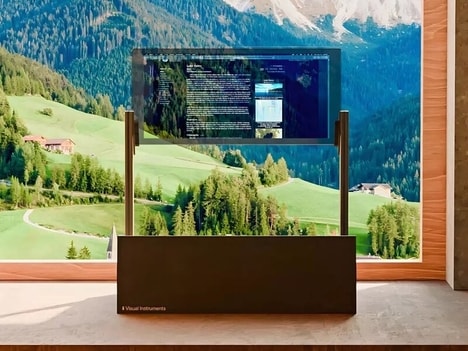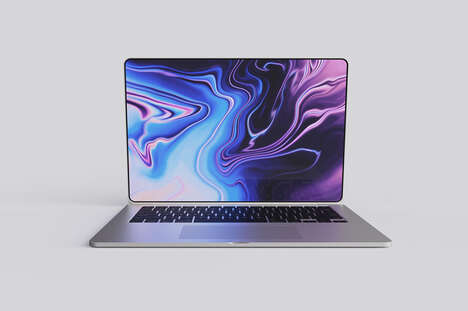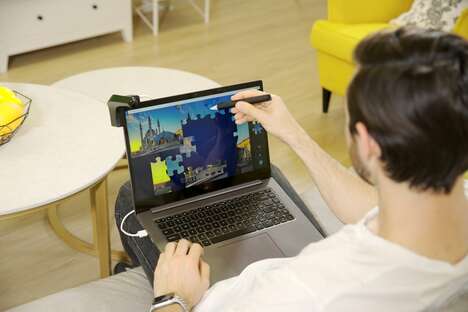
In what could be the holy grail of tablet computing, Apple's latest applied patent (see image below, right) showcases using a transparent multi-touch display that can work as a control surface on two sides, both while the device is open and closed.
The patent avoids twisting the notebook/ tablet screen completely. The transparent touch display takes the normal role of a multi-touch surface when the computer is closed, so you can simply operate on the closed top face surface.
When the computer is opened, using a typical notebook clamshell move, the inside bottom surface will display a keyboard (or any other kind of user interface) while the top surface still serves as a normal notebook screen.
What's Driving This Trend
- Transparent Displays
- The development of transparent displays presents an opportunity for companies to innovate in various industries by creating interactive and immersive user experiences.
- Multi-touch Technology
- The advancement of multi-touch technology opens up possibilities for companies to improve user interaction and create intuitive interfaces in a range of products and applications.
- Dual-sided Interfaces
- The emergence of dual-sided interfaces offers businesses the chance to design devices with versatile functionality, allowing users to interact with the technology in different ways.
Who This Affects Most
- Consumer Electronics
- Consumer electronics companies can leverage transparent displays to create innovative products such as smartphones or tablets with see-through screens for enhanced user experiences.
- Automotive
- The automotive industry can explore the integration of multi-touch technology in transparent displays to develop interactive car dashboards or heads-up displays, revolutionizing the driving experience.
- Personal Computing
- In the personal computing industry, the adoption of dual-sided interfaces in laptops or tablets could lead to the creation of devices that offer seamless transition between touch controls and traditional keyboard inputs.