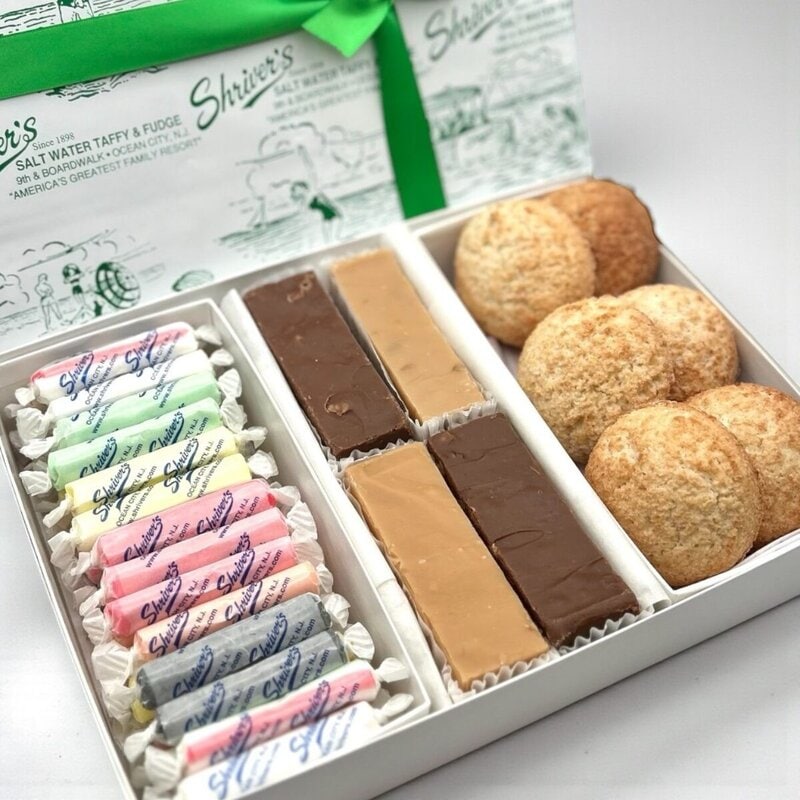
Shriver's Salt Water Taffy & Fudge turns a boardwalk candy stop into a front-row look at fresh taffy, letting visitors watch a batch take shape before they buy. The Ocean City shop makes its salt water taffy and fudge on site, with antique equipment visible through a large glass window.
Those old machines make the kitchen part of the experience instead of hiding it in the back, and the shop also offers sugar-free taffy for families who want the tradition without the full sugar load. The setup gives the candy counter a more credible freshness story than prepackaged boxes stacked by the register.
For shoppers, the candy run becomes both a souvenir pickup and a small live demo, making it easier to choose one stop over another on a crowded boardwalk. Shops selling only sealed sweets have less room to feel special when Shriver's lets the process share the spotlight.
Image Credit: Shriver's Salt Water Taffy & Fudge
What's Driving This Trend
- Visible Production Retail
- Glass-front preparation areas turn routine purchases into memorable proof-of-freshness experiences that differentiate stores in crowded tourist corridors.
- Heritage Equipment Experiences
- Antique machinery adds authenticity and entertainment value to food retail, creating new ways for legacy brands to compete beyond packaging and price.
- Reduced-sugar Nostalgia
- Sugar-free versions of classic treats extend traditional indulgence to health-conscious families without weakening the emotional pull of familiar boardwalk rituals.
Who This Affects Most
- Confectionery Retail
- On-site candy making blends product and performance, allowing sweets shops to build stronger freshness cues and destination appeal.
- Tourism Retail
- Experiential souvenirs give visitors a reason to linger, making simple purchases feel more connected to place and memory.
- Specialty Food Manufacturing
- Small-batch production displayed in retail settings reframes manufacturing transparency as a consumer-facing advantage for premium food brands.