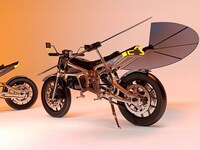
A group of students at Canara Engineering College in India have designed and developed a solar-powered "tribrid" scooter, the V–Spark 3. This innovative design will be officially inaugurated at a local function on August 20, 2010.
The V-Spark 3 runs both on fuel and electric charge. The zero-emission scooter also generates energy through onboard solar panels. The V-Spark 3 is based on a parallel hybrid system with a single accelerator and speedometer for both mechanical and electrical transmissions. Best of all, there is always a backup to keep the two-wheeler moving.
What Makes This Trend Stand Out
- Hybrid Scooters
- The development and popularity of hybrid scooters, that run on fuel and electric charge, present opportunities for businesses to invest in and develop disruptive innovations within the electric scooter industry.
- Solar-powered Vehicles
- As solar-powered vehicles become more feasible, there is potential for businesses to disrupt the automotive industry by investing in and developing solar-powered modes of transportation.
- Parallel Hybrid Systems
- The development and implementation of parallel hybrid systems in transportation, like the V-Spark 3, present opportunities for businesses to disrupt the automotive industry and create more sustainable solutions for transportation.
Sectors Adopting This
- Electric Scooter Manufacturing
- The rise of hybrid scooters presents an opportunity for businesses operating in the electric scooter manufacturing industry to develop and produce hybrid scooter models that cater to eco-friendly consumers.
- Renewable Energy
- As solar-powered vehicles become more feasible, the renewable energy industry can explore disruptive innovations in creating efficient and cost-effective solar panels for transportation purposes.
- Automotive Industry
- The development of parallel hybrid systems in transportation creates the potential for businesses in the automotive industry to disrupt traditional gasoline-powered vehicles with more sustainable and eco-friendly alternatives.