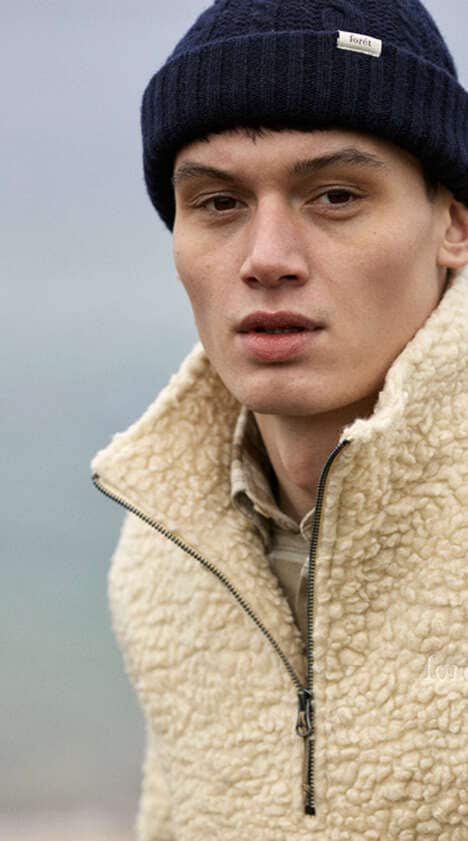
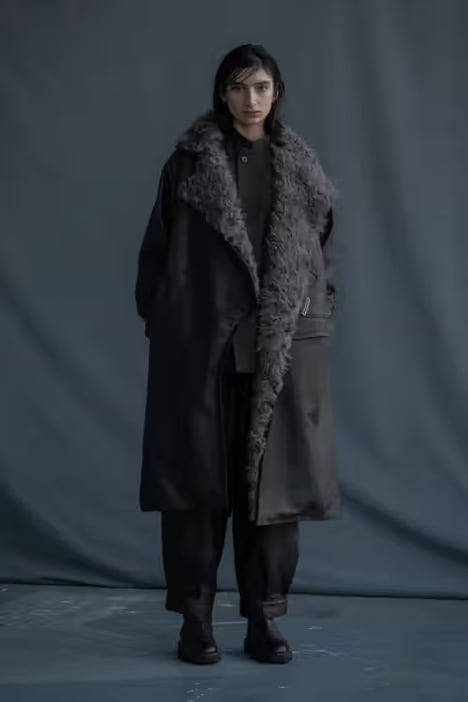
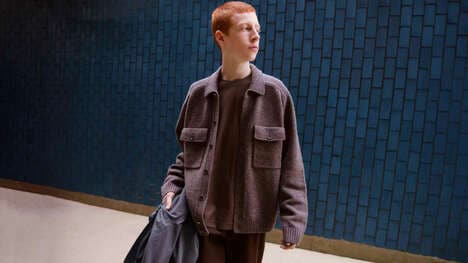
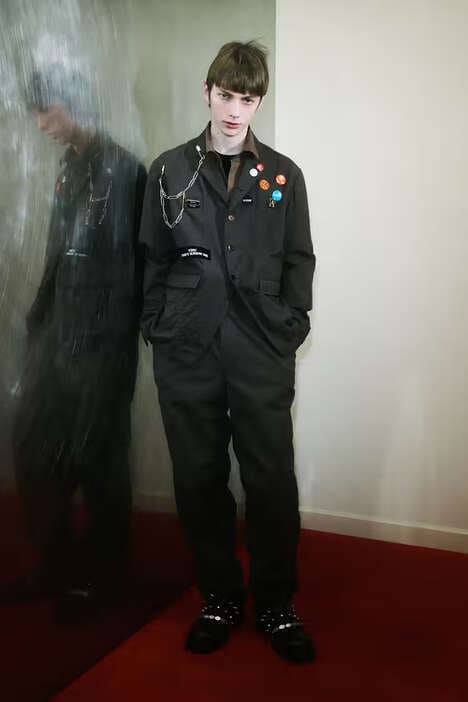
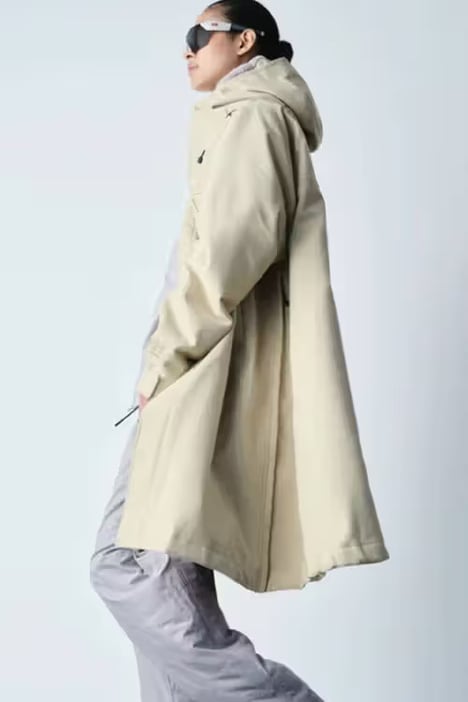
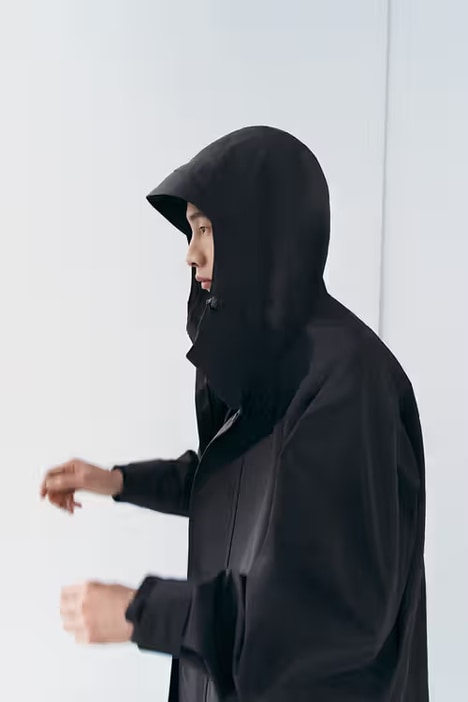
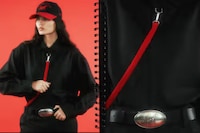
HELIOT EMIL introduces the new Unstable Equilibrium collection designed for the FW21 season. The capsule explores balance, specifically asymmetry and the notion of imbalance. The Copenhagen fashion brand uses different materials to experiment with balance itself.
The color palette is relatively dark and has some lighter neutrals that join the range including gray, stone, and light cream. To translate the imbalance, silhouettes are detailed with asymmetrical cuts, slim cuts, textural fabrics including wool, leather, and nylon. The notable piece that joins the seasonal capsule is the black blazer with overlaid materials and a cut-out vest. The layering design covers up the right side of the structure, whilst exposing the left side. The exposed arm indicates the imbalance and asymmetric silhouette using layers.
Image Credit: HELIOT EMIL
What's Driving This Trend
- Balance-exploring Fashion
- Fashion brands are exploring asymmetry and the notion of imbalance in their designs utilizing different materials to experiment with balance itself. This trend presents disruptive innovation opportunities in sustainable fashion and material science for designers to explore new ways to conceptualize and balance designs while reducing environmental impact.
- Textural Fabric Experimentation
- Fashion brands are experimenting with textural fabrics including wool, leather, and nylon to create new designs and silhouettes. This trend presents disruptive innovation opportunities in the textile industry for sustainable and ecologically conscious production methods.
- Asymmetric Silhouettes and Layering Designs
- Fashion brands are incorporating asymmetrical cuts, slim cuts, and layering designs to create asymmetric silhouettes in their designs. This trend presents disruptive innovation opportunities in 3D printing and wearable technology for the development of unique, customizable designs and intelligent materials.
Who This Affects Most
- Fashion Industry
- Designers in the fashion industry can utilize new materials and sustainable practices to explore innovative designs to balance asymmetrical silhouettes and layering designs.
- Textile Industry
- The textile industry can explore sustainable and ecologically conscious production methods to use new textural fabrics such as wool, leather, and nylon seen in the fashion industry.
- 3D Printing and Wearable Technology Industry
- The 3D printing and wearable technology industry can develop unique, customizable designs and intelligent materials to support asymmetric silhouettes, layering, and asymmetrical cuts seen in the fashion industry.