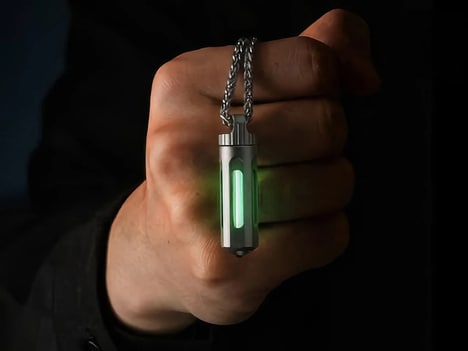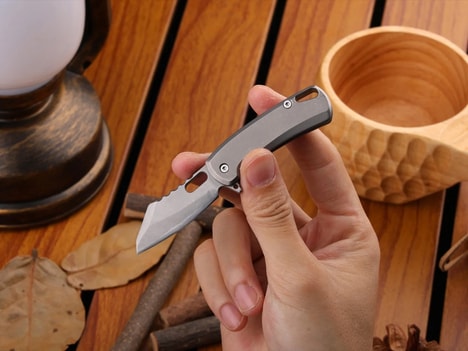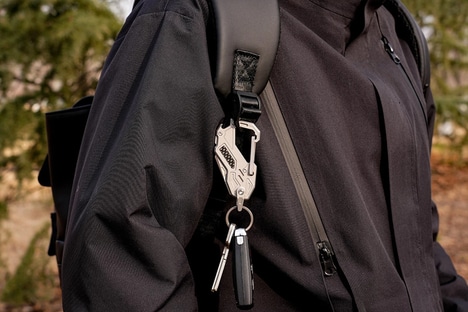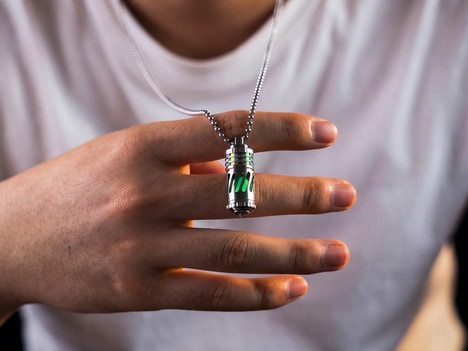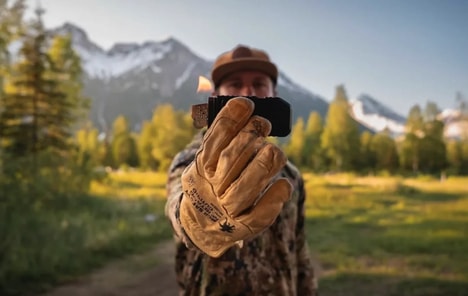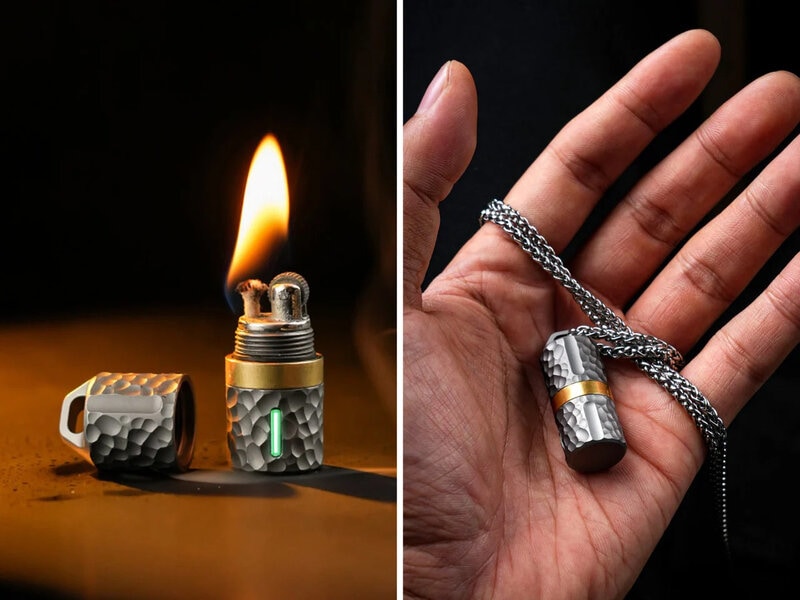
MR.GADGET's Pyra lets users carry a real flame in something closer to an AirTag than a standard lighter, using moving parts instead of electronics. The Boston-based design studio made the pocket lighter in titanium, and at 36 mm tall it sits just 4 mm above Apple's tracker.
The hammered titanium shell adds grip, and a small O-ring at the threaded closure helps the fuel chamber stay better protected in storage. Those details matter because a lighter this small has little room for wasted motion, so it is built to feel ready rather than fiddly.
This offers a different kind of purchase: a compact carry object intended to be kept, refilled, and repaired instead of tossed when it wears down. It also pushes lighter buying a bit closer to the design-minded habits seen in other pocket accessories.
Image Credit: MR.GADGET
Why This Trend Is Growing
- Micro Everyday Carry
- Ultra-compact tools that deliver full-scale utility in keychain-sized formats create room for premium accessories that blend convenience, preparedness, and design appeal.
- Repairable Pocket Gear
- Durable, refillable products position small personal items as long-term possessions rather than disposable goods, opening value around maintenance, parts, and brand loyalty.
- Mechanical Minimalism
- Non-electronic mechanisms in compact consumer goods offer a tactile alternative to battery-dependent devices while appealing to users seeking reliability and simplicity.
Industries Being Reshaped
- Outdoor Gear
- Compact flame tools made from resilient materials expand opportunities for minimalist survival and camping products suited to lightweight everyday carry.
- Personal Accessories
- Design-led utility objects are shifting keychains and pocket items into premium lifestyle categories where function, material quality, and collectability converge.
- Smoking Accessories
- Reusable mini lighters with refined construction introduce a more durable and aesthetically driven segment within a category often dominated by disposable products.