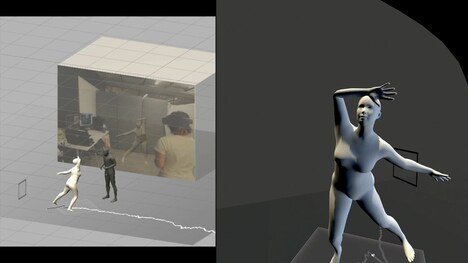
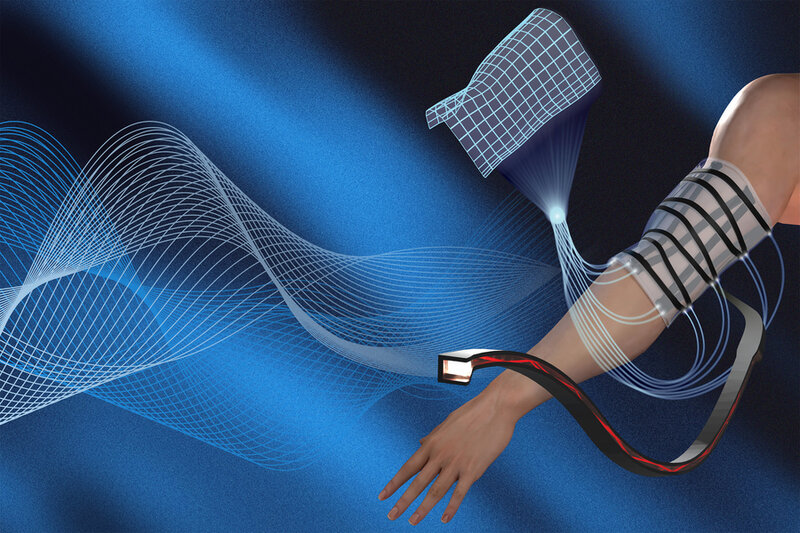
MIT engineers have developed shape-sensing wearable sheets that digitally capture movement without relying on conventional rigid sensors. The flexible silicone material contains specially designed optical fibers that respond to bending and twisting through changes in light transmission. An accompanying algorithm interprets these signals to generate a three-dimensional representation of the material's movements almost instantly.
Unlike traditional motion-tracking systems, the sheet uses soft rubber fibers with textured surfaces to detect bending direction. Researchers achieved reconstruction errors below 0.4 centimeters, compared with approximately 1 to 2 centimeters for existing rigid-sensor designs. The material also continues functioning when individual fibers become damaged.
For healthcare providers, future wearable versions could improve rehabilitation assessments by recording patient mobility across appointments. The technology also presents opportunities for gaming, virtual reality, and robotics developers seeking comfortable, adaptable motion-tracking systems.
Image Credit: MIT
Key Themes Behind This Trend
- Soft Motion Tracking
- Flexible sensor materials are creating more comfortable alternatives to rigid wearables for precise body movement capture in healthcare, gaming, and immersive interfaces.
- Fiber-optic Wearables
- Optical fibers embedded in stretchable surfaces are enabling lightweight systems that translate bending and twisting into real-time digital movement data.
- Damage-tolerant Sensors
- Resilient sensing architectures that continue operating after partial fiber failure introduce new reliability standards for continuous monitoring and adaptive robotics.
Where This Applies
- Digital Health
- Rehabilitation providers gain access to movement analytics that can document patient mobility trends more naturally across clinical and remote care settings.
- Virtual Reality
- Immersive platform developers benefit from soft, body-conforming motion capture that improves comfort while supporting responsive three-dimensional interaction.
- Robotics
- Soft robotics systems are positioned to use shape-aware materials for safer, more adaptable movement sensing in complex physical environments.