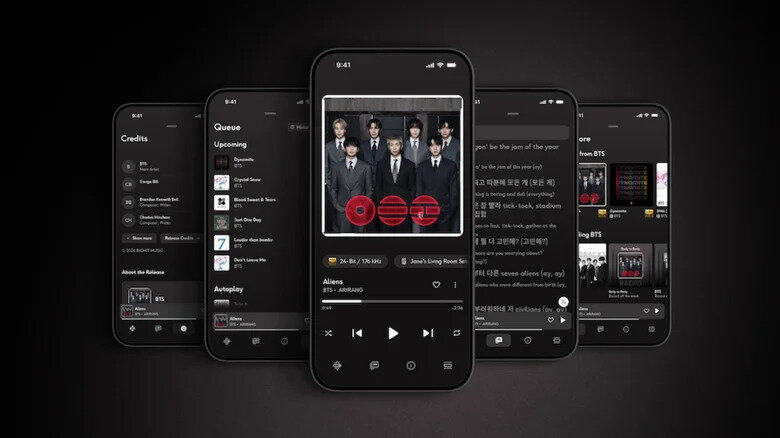
The Qobuz music player has received a major update that introduces real-time lyrics alongside a redesigned listening experience. Lyrics now scroll line by line with translation support, while the refreshed interface draws visual inspiration from album artwork. Additional updates include a persistent mini player that remains visible during navigation, an improved playback queue with expanded controls and a redesigned credits section that provides easier access to artist and album information.
The update also adds a new Explore section that recommends similar albums, artists, playlists and radio stations based on listening habits, with browsing available by genre or record label. Users can follow artists and labels directly from the credits page, while Siri integration adds voice control for iOS devices. Available on both iOS and Android, the refreshed music player expands Qobuz's discovery and playback features while maintaining its focus on album-based listening and artist-focused content.
What Makes This Trend Stand Out
- Synchronized Lyric Experiences
- Real-time lyrics with translation support create richer listening contexts where platforms can differentiate through accessibility, language learning, and fan engagement layers.
- Album-centric Discovery
- Curated recommendations around albums, artists, labels, and genres signal renewed potential for premium music services to compete beyond single-track algorithms.
- Persistent Audio Interfaces
- Mini players, redesigned queues, and voice control reflect a shift toward frictionless navigation that keeps playback central across mobile entertainment experiences.
Sectors Adopting This
- Music Streaming
- Enhanced discovery tools and artist-focused content expand subscription value by blending personalization with editorial depth and catalog exploration.
- Mobile Applications
- Interface updates inspired by album artwork and always-accessible controls highlight opportunities for more immersive, context-aware app design.
- Digital Entertainment
- Integrated lyrics, credits, recommendations, and voice features point to converged media experiences that merge utility, storytelling, and discovery.