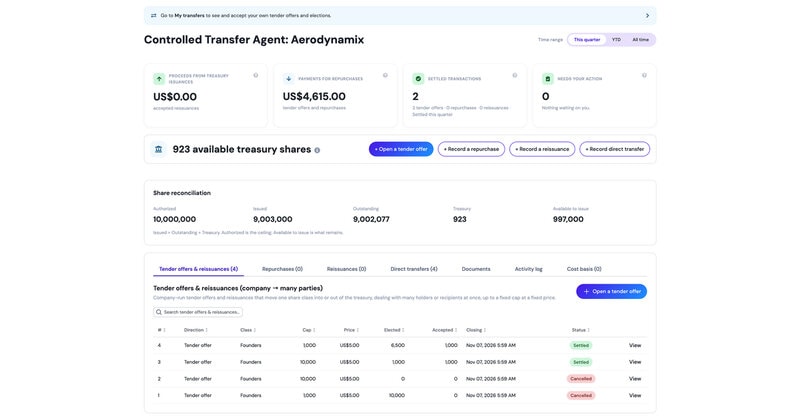
Eqvista is expanding private-share liquidity with company-sponsored tender offers on its equity management platform, giving private companies a single place to run organized share-sale events for employees and early investors. The addition ties ownership records to live valuation data throughout the process.
Pricing is based on 'Eqvista Real-Time Company Valuation®' technology, which tracks about 65,000 U.S. private companies with an estimated combined value of $9 trillion. Automatic cap table updates and company-set participation windows keep completed transfers and eligibility rules within the same workflow, cutting post-deal record cleanup.
Built into an equity platform already used by more than 25,000 companies worldwide, the tender offer workflow turns liquidity events into a repeatable administrative feature. Eqvista's planned secondary marketplace builds on that workflow, broadening its role from recordkeeping to private-share transactions while keeping control with the company running the sale.
Image Credit: Eqvista
What Makes This Trend Stand Out
- Private-share Liquidity
- Structured tender offers are transforming illiquid private equity into more accessible transaction events for employees, founders, and early investors.
- Valuation-linked Equity Workflows
- Real-time company valuation data embedded into cap table systems creates more transparent pricing infrastructure for private-market share sales.
- Company-controlled Secondary Sales
- Employer-managed resale windows introduce a governed alternative to informal secondary transactions while preserving oversight of eligibility, timing, and ownership records.
Sectors Adopting This
- Equity Management Software
- Platforms that combine cap table administration with transaction execution are expanding from compliance tools into private-market infrastructure.
- Private Capital Markets
- Digitized tender offers and secondary marketplaces are reshaping how private-company shareholders access liquidity before public exits.
- Financial Technology
- Automated valuation, transfer tracking, and shareholder eligibility systems signal new fintech models for regulated private securities transactions.