Electric Plant pairs cambium-mounted sensors with 'Bombadil,' a cloud-based AI model for growers and foresters that translates stem electrical activity into guidance on watering and fertilizer timing. Trained on signals from about 125 species, the system reads what is happening inside the plant instead of inferring needs from soil or satellite data alone.
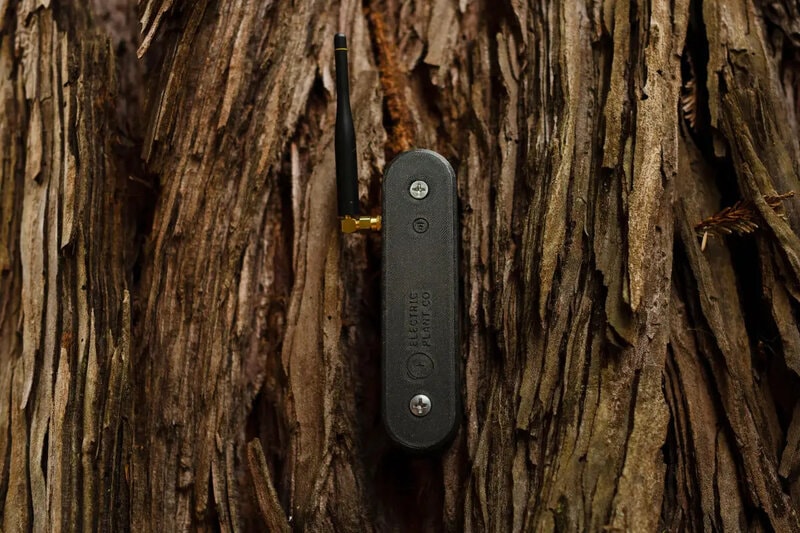
The sensors, about the size of a folded iPhone, use stainless-steel screws to reach the cambium, the living layer under the bark, to detect microvolt shifts. The sensors transmit readings over a low-power wireless link to a base station, and only a couple of sensors are needed per acre.
Coverage across 125 species broadens the product beyond a single crop and into both agricultural and forestry applications. Pricing in the tens of dollars undercuts monitoring gear that costs thousands, making plant-level data easier to justify across larger acreages.
Image Credit: Electric Plant
What's Driving This Trend
- Plant-level Intelligence
- Low-cost cambium sensors paired with AI models create new value by replacing indirect environmental guesses with real-time biological signals from crops and trees.
- Precision Resource Timing
- Electrical activity inside plants enables more accurate irrigation and fertilizer schedules, opening space for input optimization platforms that reduce waste across farms and forests.
- Species-agnostic Agtech
- Broad training across many plant species supports scalable monitoring systems that move beyond single-crop solutions into diversified agriculture, forestry, and land management.
Who This Affects Most
- Agriculture
- Growers gain access to affordable plant-based diagnostics that can reshape irrigation, fertilization, and yield-management economics across large acreage.
- Forestry
- Forest managers can use tree signal data to better understand stress, drought response, and nutrient needs in managed timber, conservation, and restoration settings.
- Wireless Sensor Networks
- Low-power field connectivity for sparse, acre-scale deployments creates demand for rugged sensor infrastructure that links biological data to cloud-based decision systems.