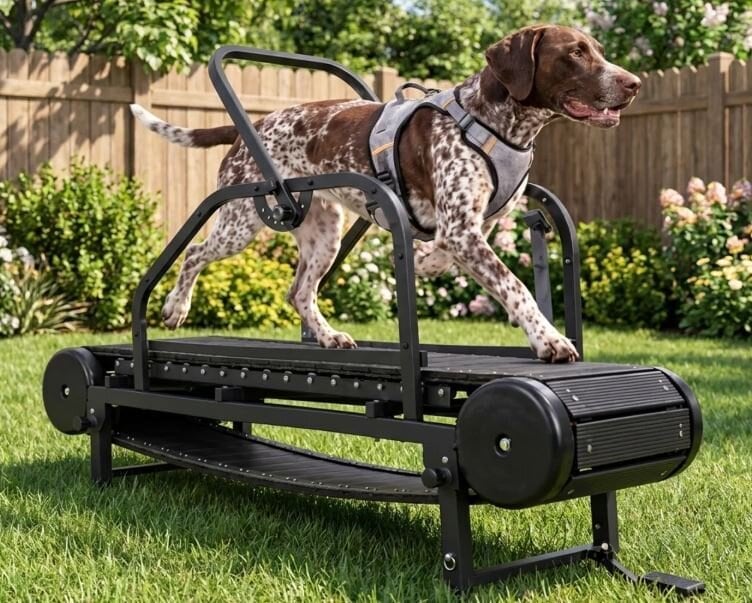
Kolmmeo builds extra challenge into indoor canine exercise with its 18-inch dog treadmill, which offers five hand-set incline positions so large dogs can walk against more resistance at home. The non-electric design avoids outlet placement, and a foot brake lets handlers quickly stop the track during a session.
Built for dogs up to 80 lb, the treadmill pairs a heavy-duty frame with an ABS slat deck to create a steadier walking surface. The incline range runs from 3.35° to 7°, and a basic display keeps simple workout stats in view while the pace stays slow and controlled.
Because the support legs fold down for storage, the Kolmmeo unit fits homes that need to clear out pet gear between workouts. Its 300-lb frame rating and 1 km/h top speed keep the focus on supervised conditioning instead of full-speed running.
Image Credit: Gadgetify
Why This Trend Is Growing
- Non-electric Pet Fitness
- Manual exercise equipment for animals creates whitespace for quieter, outlet-free conditioning products suited to apartments, clinics, and energy-conscious homes.
- Adjustable Canine Conditioning
- Incline-based resistance features point to growing demand for customizable pet wellness tools that support strength, rehabilitation, and weight management.
- Foldable Pet Equipment
- Space-saving designs highlight an opportunity for compact pet care products that blend home fitness functionality with easier storage in smaller living spaces.
Industries Being Reshaped
- Pet Wellness
- At-home conditioning products expand the pet wellness market beyond nutrition and grooming into supervised exercise, mobility support, and preventative health routines.
- Home Fitness
- Canine-focused treadmills signal a broader shift in home fitness equipment toward specialized household users, including pets requiring controlled indoor activity.
- Veterinary Rehabilitation
- Low-speed manual treadmills introduce accessible tools for recovery and mobility programs where controlled movement and handler oversight are essential.