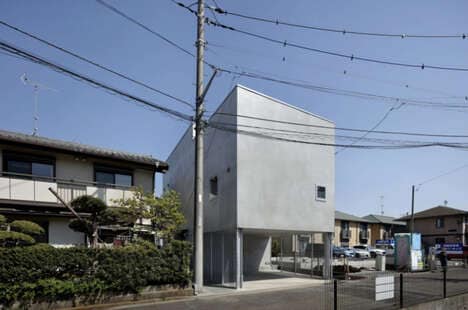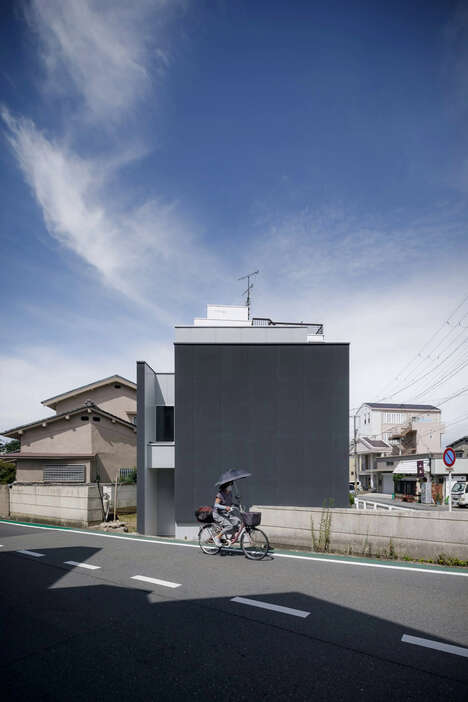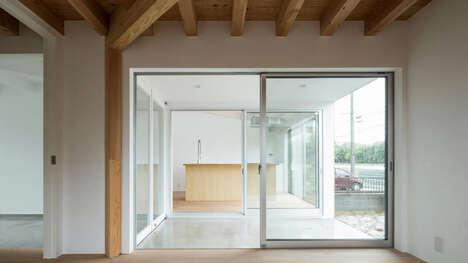
The Kyoto Town House is not your average town house; to the normal eye, this house just has crazy walls that go zig-zag and everywhere. What sets it apart is the polyhedral form of partition walls, which are based on logical concepts that perform multiple functions. Now you know.
Designed by Kantero Takeguchi and Asako Yamamoto, the walls reflect natural light, and stimulate ‘perception’ and ‘behaviour.’ As mathematically charming the Kyoto Town House may be, for everyone else it’s sure dizzyingly fun to look at.
What's Driving This Trend
- Polyhedral Form
- Disruptive innovation opportunity: Explore the use of polyhedral forms in architecture and design to create visually stimulating and multifunctional spaces.
- Stimulating Perception and Behavior
- Disruptive innovation opportunity: Develop technologies and materials that can mimic natural light and stimulate human perception and behavior in built environments.
- Mathematical Design Concepts
- Disruptive innovation opportunity: Apply mathematical concepts in the design process to create unique and aesthetically appealing structures.
Who This Affects Most
- Architecture
- Disruptive innovation opportunity: Integrate mathematical and visually stimulating elements in architectural designs to create houses and buildings that offer a unique experience for occupants.
- Interior Design
- Disruptive innovation opportunity: Incorporate polyhedral forms and lighting techniques inspired by natural light to create immersive and dynamic interiors.
- Materials Science
- Disruptive innovation opportunity: Develop new materials that have light-reflecting properties and can be used to create visually captivating and functional partition walls.