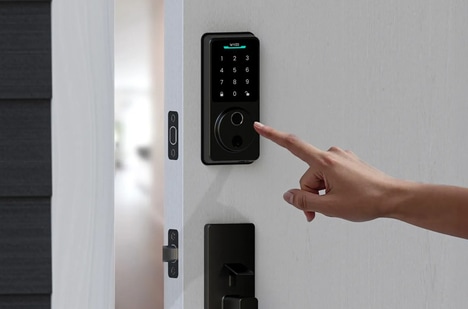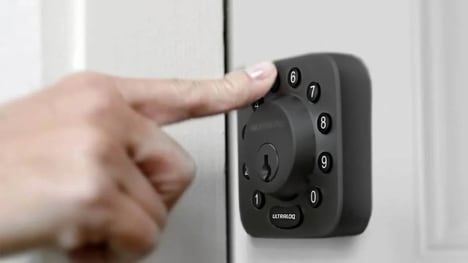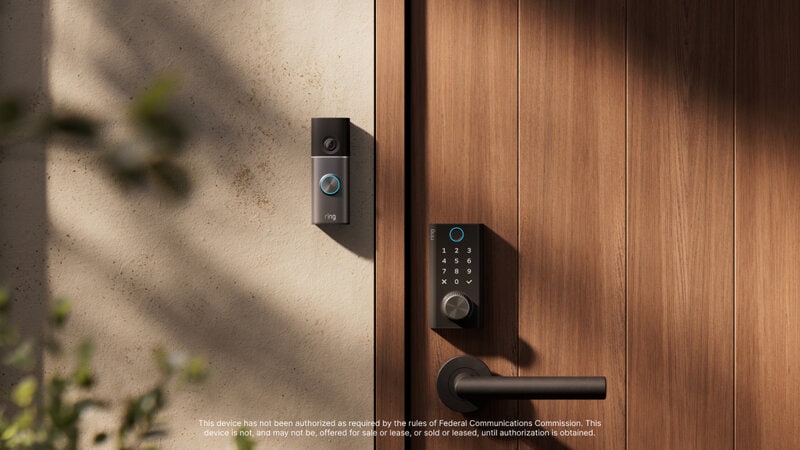
Ring is moving into smart locks with a deadbolt that can wake itself after a drained battery, helping homeowners avoid a lockout at the door. Its power dial is turned by hand to generate enough charge to open the lock, eliminating the need for a hidden spare key.
The rechargeable pack is designed to last about a year, so a lightly used home does not require constant check-ins. Through the Ring app, owners can also grant recurring entry to dog walkers, reducing some of the key handoffs that usually come with part-time access.
In daily use, the lock stays simple: a resident can tap a fingerprint reader for quick entry and reach for the dial only if the battery has gone flat. It fits a standard single-cylinder deadbolt and is slated for U.S. sales in early 2027, pending FCC approval.
Image Credit: Ring
What's Driving This Trend
- Self-powered Access
- Manual energy harvesting in connected locks points to hardware designs that maintain critical functions when batteries, grids, or backup keys fail.
- Battery-fail Resilience
- Smart home products with last-resort mechanical charging create new expectations for reliability in security devices that cannot afford downtime.
- Temporary Digital Entry
- App-based recurring permissions for service providers expand the role of smart locks from simple access control to household logistics infrastructure.
Who This Affects Most
- Smart Home Security
- Connected deadbolts with biometric entry and emergency power features raise the competitive bar for residential safety and convenience.
- Property Management
- Reliable digital access systems support remote turnover, maintenance visits, and guest entry without the operational friction of physical key exchanges.
- Pet Care Services
- Scheduled smart lock permissions give dog walkers and home service providers a more secure framework for recurring visits to private residences.