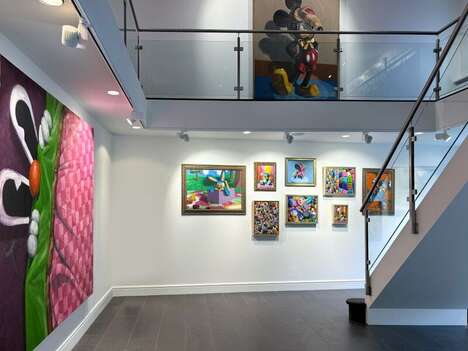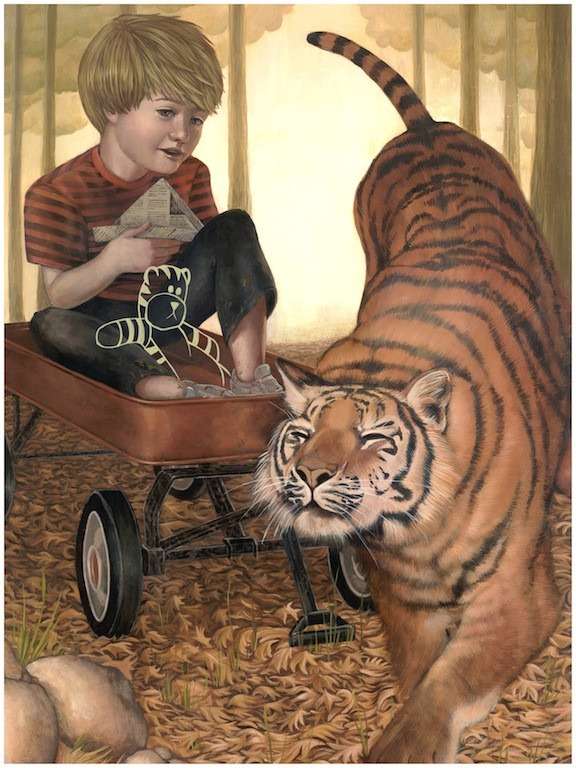
Taking what was once a delightful imaginary escape and incorporating it into an adult world, Casey Wheldon creates artwork that is a mixture of cherished memories and forgotten fantasies.
Wheldon's artwork is a fantastic blend of imagery that draws inspiration from childhood companions and youthful escapism. The imaginary companions that accompanied our childhood adventures no longer have a place within the adult world, despite the desire to keep them close. The illustrations contrast magical illustrations with woeful faces, indicative of the acceptance that there comes a time when old comforts need to be retired.
Casey Wheldon's photorealistic depiction of Calvin and Hobbes is particularly astonishing. A young boy sits in a red wagon accompanied by a very real-looking tiger companion; for them, their imagination is as real as anything the world could throw their way.
Why This Trend Is Growing
- Blending Imaginary and Real
- Artwork that incorporates childhood fantasies into the adult world presents disruptive innovation opportunities in the fields of art and design.
- Acceptance of Change and Growth
- The contrast between magical imagery and somber expressions in artwork highlights the growing acceptance of transitioning from childhood comforts, offering opportunities for innovation in psychology and personal development.
- Nostalgia and Sentimentality
- Art that evokes memories of cherished companions and escapism from youth provides opportunities for disruptive innovation in advertising and marketing.
Industries Being Reshaped
- Art and Design
- Incorporating childhood fantasies into adult artwork brings disruptive innovation to the art and design industry, creating a new market for nostalgic and sentimental pieces.
- Psychology and Personal Development
- The artwork's portrayal of accepting change and growth presents opportunities for disruptive innovation in psychology and personal development, offering new approaches to embrace transitions and personal growth.
- Advertising and Marketing
- The nostalgic and sentimental elements in the artwork provide disruptive innovation opportunities in advertising and marketing, allowing brands to tap into customer emotions and create meaningful connections.