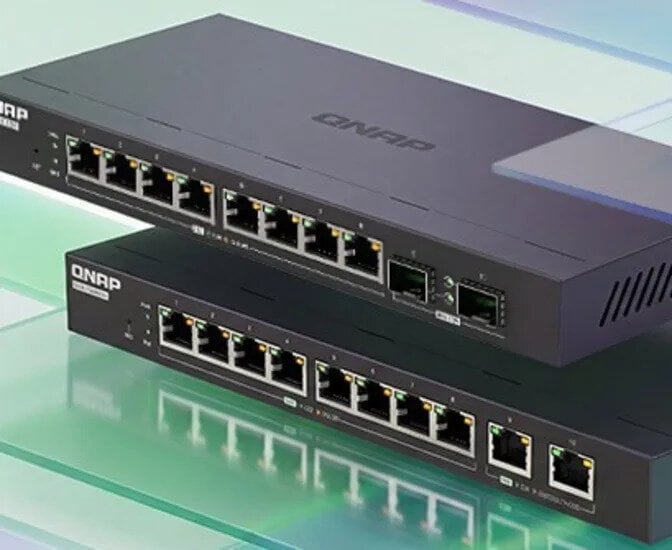
QNAP is expanding home and small-office networking with two ‘Lite Managed’ switches built to move more traffic across a wired local network. Each switch has eight 2.5GbE ports for local devices and Wi-Fi equipment, while another pair of 10GbE links can connect to a second switch.
One version uses copper RJ45 uplinks that can step down to lower multigigabit rates for longer cable runs. The other uses SFP+ slots, allowing buyers to choose fiber or direct-attach cabling. Both operate silently, and their web interface keeps setup simple. They are already on sale through QNAP’s official U.S. store.
At $179 and $129, the pair makes multigigabit upgrades more accessible for small offices and demanding home users seeking VLANs and link aggregation without deeper switch administration. The ‘Lite Managed’ approach turns faster wired backbones into a simpler purchase for networks where modern Wi-Fi can outpace basic 1GbE links.
Image Credit: Qnap
What's Driving This Trend
- Affordable Multigigabit Networking
- Lower-cost 2.5GbE and 10GbE hardware is making high-speed wired infrastructure practical for homes and small offices that previously relied on basic gigabit networks.
- Lite Managed Infrastructure
- Simplified management interfaces are reducing the technical barrier to VLANs, link aggregation, and faster backbones for non-specialist network owners.
- Wi-fi Backhaul Upgrades
- Modern wireless systems are exposing the limits of 1GbE switching, creating demand for accessible wired backbones that can support faster access points and local devices.
Who This Affects Most
- Networking Hardware
- Vendors have room to differentiate with compact, silent, and budget-friendly switches that bridge consumer ease of use with small-business performance needs.
- Small Business Technology
- Growing bandwidth demands in offices are expanding the market for plug-and-play infrastructure that delivers enterprise-like capabilities without complex administration.
- Smart Home Infrastructure
- High-performance homes with NAS devices, media servers, and advanced Wi-Fi are creating opportunities for approachable wired upgrades beyond traditional consumer routers.