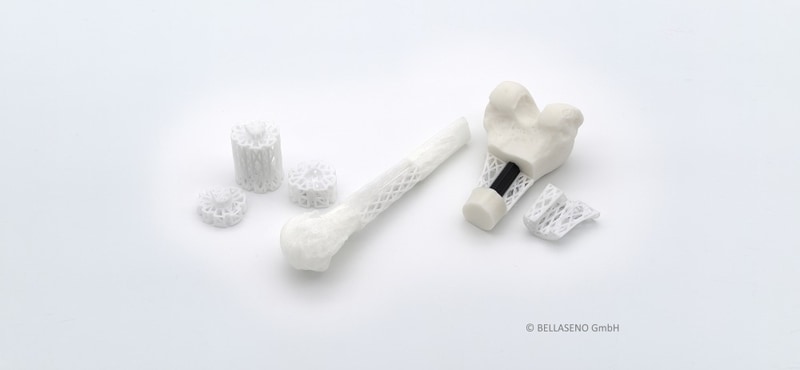
Bioresorbable bone implants are advancing regenerative medicine by replacing permanent implants with patient-specific scaffolds that gradually dissolve as new tissue forms. Evonik and BellaSeno are commercializing 3D-printed bone scaffolds made with Evonik's RESOMER® bioresorbable polymers for treating large and complex bone defects. The custom-designed implants provide structural support during healing before safely degrading at a rate that aligns with natural bone regeneration, offering an alternative to conventional grafting techniques.
For medical device manufacturers, bioresorbable implants create opportunities to develop personalized treatment solutions that improve surgical precision and patient outcomes. Combining advanced biomaterials with additive manufacturing also enables customized implants to be produced more efficiently for complex clinical cases. As regenerative medicine continues to expand, partnerships between materials suppliers and medical technology companies are likely to accelerate the commercialization of patient-specific implants across orthopedic, reconstructive, and soft tissue applications.
Image Credit: Evonik and BellaSeno
Why This Trend Is Growing
- Bioresorbable Implants
- Temporary implant structures that safely degrade during healing are reshaping orthopedic care through reduced long-term device complications and more natural tissue restoration.
- Patient-specific Scaffolds
- Customized 3D-printed scaffolds reflect a shift toward anatomical precision in regenerative procedures, expanding possibilities for treating complex defects with tailored structural support.
- Regenerative Biomaterials
- Advanced polymers designed to interact with biological healing processes are creating new pathways for medical products that combine therapeutic function with controlled material absorption.
Industries Being Reshaped
- Medical Devices
- Device makers are gaining new product pathways as bioresorbable, customized implants move beyond conventional permanent hardware and graft-based solutions.
- Additive Manufacturing
- Healthcare-focused 3D printing is becoming a critical production model for complex implants that require individualized geometries and efficient clinical customization.
- Orthopedics
- Bone repair markets are being transformed by scaffold-based approaches that support regeneration while reducing reliance on traditional grafts and permanent fixation systems.