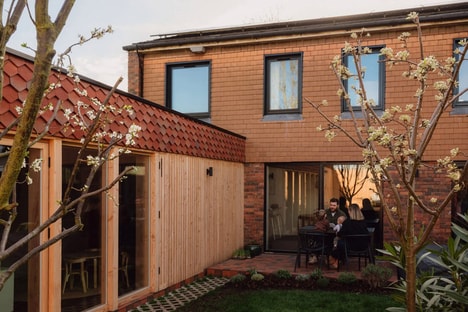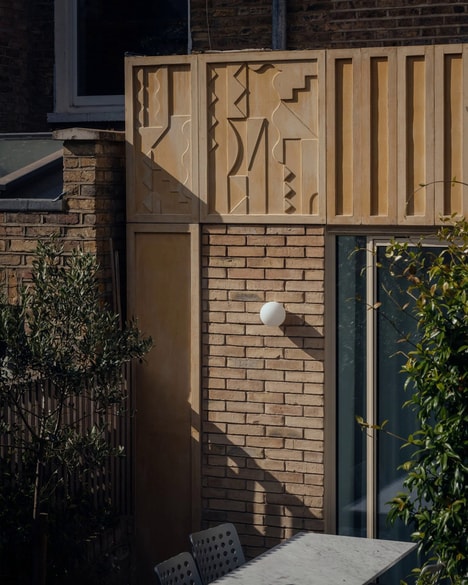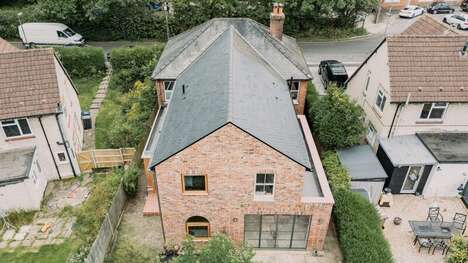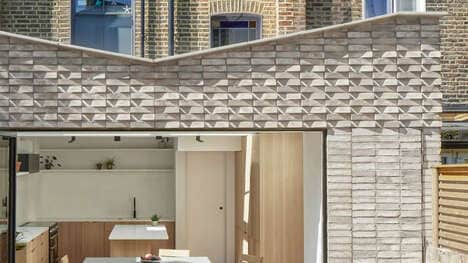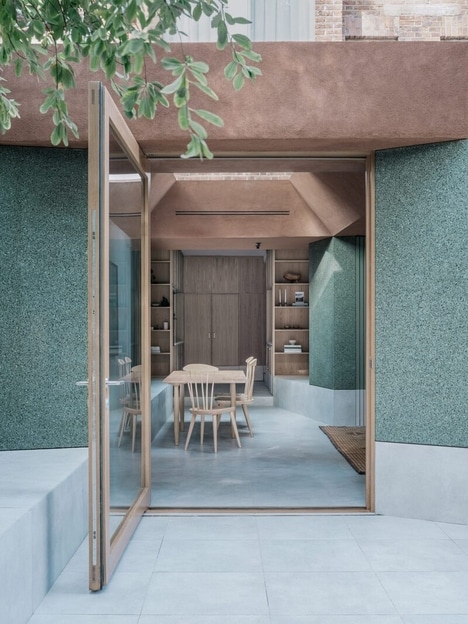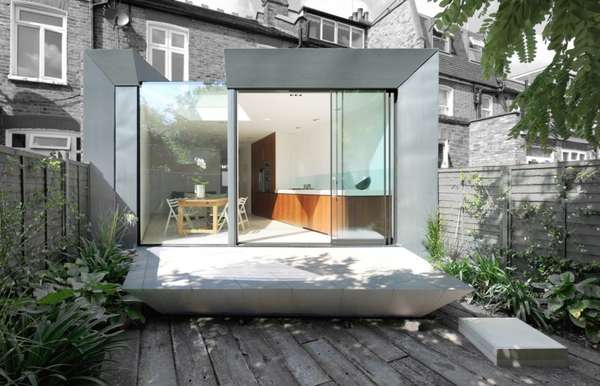
The Faceted House 1 by Paul McAneary Architects is simply just an extension that has been added on to a two-story home for additional space. This small add-on is located in Hammersmith, London. From the exterior, there is a clear angled shape that forms the outline of the overall structure.
The owners of this home wanted a contemporary yet clutter-free living area. Even though the Faceted House 1 by Paul McAneary Architects may look small, the add-on has its own kitchen along with indoor and outdoor spaces.
What Makes This Trend Stand Out
- Angled House Extensions
- There is an opportunity to create new design standards for room or structure extensions that fully maximize available spaces using the concept of angled shapes.
- Small but Voluminous Homes
- Housing industry players can innovate their designs to create small but voluminous homes that satisfy modern living space demands.
- Contemporary Clutter-free Living Spaces
- The market has a high demand for contemporary and clutter-free living spaces as seen in the Faceted House 1, which has a kitchen, indoor and outdoor spaces, suggesting a need to provide more compact living space ideas that combine indoor and outdoor needs.
Sectors Adopting This
- Architecture
- Architects and engineers can use the concept of angled shapes in designing room or structure extensions to provide an excellent user experience.
- Real Estate
- The real estate industry can leverage innovative voluminous small-space design solutions to create compact, cost-saving homes for young adults and small families.
- Interior Design
- Interior designers can recommend similar design concepts like creating decluttered spaces and unique outdoor designs to their clients seeking contemporary space preferences.