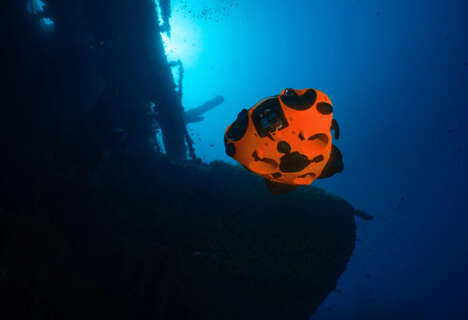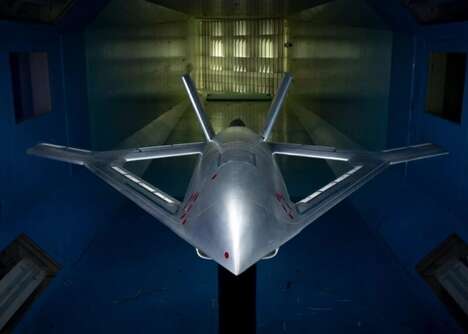
Lockheed Martin's Skunk Works, famed for the U-2 and Blackbird spy planes that flew higher than anything else in the world in their day, is trying for a different altitude record: an airplane that starts and ends its mission 150 feet underwater.
The Cormorant, a stealthy, jet-powered, autonomous aircraft that could be outfitted with either short-range weapons or surveillance equipment, is designed to launch out of the Trident missile tubes in some of the U.S. Navy's gigantic Cold War--era Ohio-class submarines.
These formerly nuke-toting subs have become less useful in a military climate evolved to favor surgical strikes over nuclear stalemates, but the Cormorant could use their now-vacant tubes to provide another unmanned option for spying on or destroying targets near the coast.
What Makes This Trend Stand Out
- Underwater Launch
- The trend of developing autonomous aircraft that can start and end missions underwater opens up new possibilities.
- Autonomous Surveillance
- The trend of developing autonomous aircraft with surveillance equipment offers disruptive innovation opportunities for defense industries.
- Multi-use Submarines
- The trend of converting submarines for multi-use purposes creates opportunities for defense industries.
Sectors Adopting This
- Defense
- The Defense Industry could benefit from developing various short range weapons or surveillance equipment on an autonomous aircraft for underwater launch.
- Aerospace
- The Aerospace Industry can disrupt the market by pushing the boundaries of autonomous aircrafts and developing new launching mechanisms.
- Maritime
- The Maritime Industry can benefit by improving underwater launching mechanisms and in creating more autonomous marine vehicles.