It’s like seeing the world in a drop of water; actually through a drop of water.
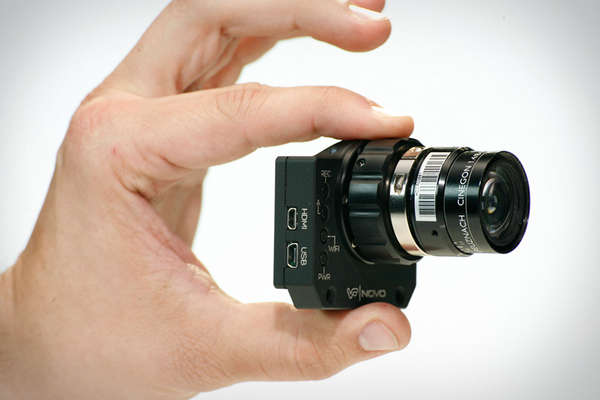
Professor Amir H. Hirsa at Rensselaer Polytechnic Institute has developed a miniature camera that can capture 250 pictures per second while using less energy than other technologies.
According to Hirsa, “The lens is easy to manipulate, with very little energy, and it’s almost always in focus--no matter how close or far away it is from an object.”
The lens is made up of two drops of water that are constrained in a small tube. They are exposed to sound waves so they begin oscillating. The change in geometry forms a constantly shape changing lens. An imaging sensor behind the droplets captures the images and a computer analyzes them, discarding any that are out of focus. The result is a camera that is focused on whatever it sees.
Look for this technology anywhere a small, lightweight, energy efficient camera is needed.
What Makes This Trend Stand Out
- Miniature Camera Technology
- Development of a miniature camera that can capture 250 pictures per second using less energy than other technologies presents an opportunity for creating smaller, more energy efficient cameras.
- Sound-controlled Lenses
- The creation of lenses that can be controlled by sound waves presents an opportunity for developing new applications in areas such as medical imaging and scientific research.
- Constantly Shifting Lenses
- The ability to create lenses that are constantly changing shape presents an opportunity for creating adaptive optics systems that can be used in fields such as astronomy and defense technologies.
Sectors Adopting This
- Photography
- The development of energy-efficient miniature cameras could revolutionize the world of photography by allowing for new forms of capture and imaging.
- Medical Imaging
- The use of sound-controlled lenses presents an opportunity for advancements in medical imaging technologies that could help detect and treat diseases more effectively.
- Scientific Research
- The constantly shifting lenses created through the use of sound waves could have applications in scientific research, where imaging is often used to study complex systems and phenomena.