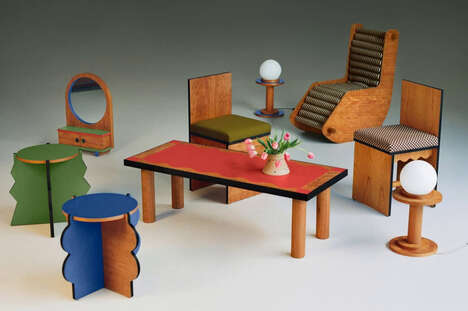
Hannes Grebin took furniture that he remembered from his home in the 1970's in Germany and clashed it with modern design to create this cubism-inspired collection. The grouping includes a sofa, chair, pendant light, and bureau finished in a retro-futuristic fashion.
You have to love the past-meets-future details, like white doilies tenderly laid over the headrests, traditional gold and cream fabric and beige fringe dusting the floor.
I swear we ripped out many lights that looked just like that when we moved into our late 1960’s bungalow.
What Makes This Trend Stand Out
- Retro-futuristic Design
- Opportunity for furniture designers to combine elements of the past and future to create unique and visually striking pieces.
- Cubism-inspired Furniture
- Chance for artists and designers to explore the cubist art movement and apply its principles to furniture design, resulting in abstract and geometric pieces.
- Nostalgic Aesthetics
- Potential for creating furniture collections that evoke nostalgia and sentimentality, resonating with consumers who long for a retro-futuristic aesthetic.
Sectors Adopting This
- Furniture Design
- Disruptive innovation opportunity for furniture manufacturers to incorporate retro-futuristic and cubism-inspired designs into their product lines, appealing to a niche market.
- Interior Design
- Opportunity for interior designers to incorporate retro-futuristic furniture pieces into their projects, creating a bold and eclectic style for clients who appreciate unique designs.
- Art and Decor
- Chance for artists and decor companies to produce and market retro-futuristic and cubism-inspired furniture as decorative art pieces, catering to collectors and enthusiasts.