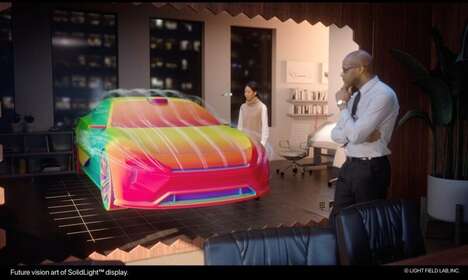
If you have ever wondering when holograms like the ones seen in Star Trek would become a real-life entity, the Queen's University TeleHuman telepod has made that dream a reality.
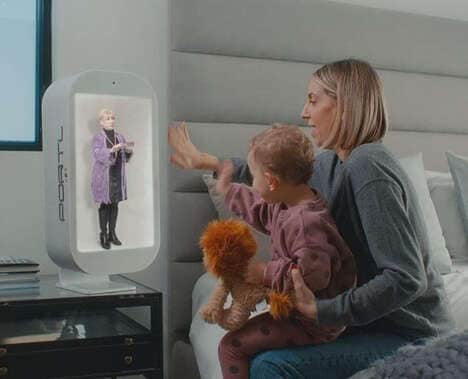
While video chatting has becoming increasingly lifelike, conversing with a flat, 2D image of a friend or family member on a computer screen is still far from realistic. However, the use of six Microsoft Kinect sensors resting atop a cylindrical tube can project a 3D, holographic image of a person that moves and reacts like a real human for a conversation more closely resembling that of a face-to-face interaction.
Using three-dimensional camera equipment placed inside of the pod, a projection of the person is compiled with the aid of convex mirrors. The speaker then appears as a 3D image inside of the telepod to allow the conveyance of body language and a more intimate interaction between the two speakers.
Key Themes Behind This Trend
- Hyperreal Hologram Technology
- The advancement of holographic technology in creating realistic and immersive 3D interactions.
- Enhanced Video Chat Experience
- The development of video chat applications that utilize 3D holographic images for more lifelike conversations.
- Telepresence Revolution
- The transformation of remote communication through the integration of holographic telepods for virtual face-to-face interactions.
Where This Applies
- Communication Technology
- Opportunities for companies to incorporate hyperreal hologram technology into video chat applications for more engaging and immersive experiences.
- Entertainment and Gaming
- The potential for hyperreal hologram technology to revolutionize virtual reality gaming and entertainment experiences by bringing characters and environments to life.
- Teleconferencing and Collaboration
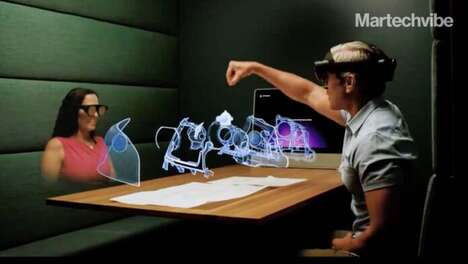
- Disruptive innovation possibilities in telepresence technology for remote meetings and collaboration, enabling more natural and interactive communication.