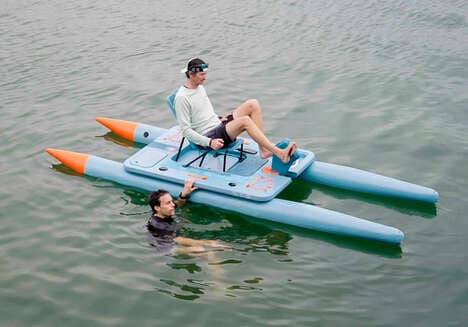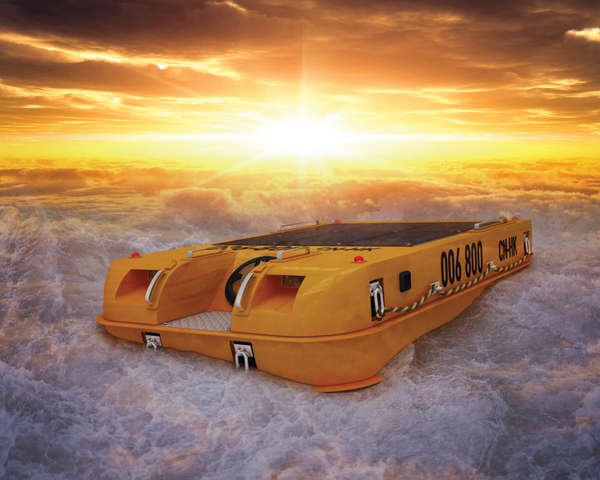
Humans are unlikely to tame the ocean anytime soon, which is why vessels like the Molnarka by Daniel Lorincz can really come in handy. A lifeguard on duty at the beach won't mean accidents are less likely to occur, but with a conveyance such as this, rescue missions would certainly be much more successful.
The gangly watercraft is lightweight and mobile, featuring a compact deck and three flanking rafts that keep it afloat. These buoyant feet are attached to the hull of the boat by bicycle-like braces, and can separate or come together to lift the core over the water. At a height of 4 meters above sea level, the Molnarka by Daniel Lorincz can offer rescuers an opportune perspective of a situation below, and effectively and noticeably flag down emergency motorboats in times of crisis.
What Makes This Trend Stand Out
- Water Rescue Innovation
- The Molnarka boat and similar inventions for water rescue offer opportunities to create disruptive change in the emergency services industry.
- Compact Watercraft Design
- There is potential for innovation in the development of mobile and lightweight watercrafts that can be used for a variety of purposes.
- Multi-use Buoyant Feet
- The use of buoyant feet on watercrafts like the Molnarka can inspire the development of similar multi-use appendages for other marine vessels.
Sectors Adopting This
- Emergency Services
- The Molnarka and other water rescue innovations offer opportunities to create more effective and efficient emergency services.
- Recreational Boating
- Developments in the design of lightweight and compact watercrafts can have applications in the recreational boating industry.
- Marine Technology
- New buoyant technology and design innovations for watercrafts like the Molnarka can drive change in the marine technology industry.