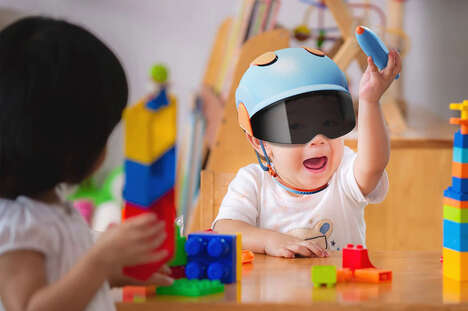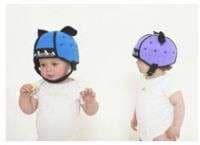
Falling down is a fact of life, but according to Kelly Forsyth-Gibson, the inventor of the Thudguard helmet for toddlers, it's preventable and should be avoided. I remember when learning to walk was uncontrolled, with bumps and bruises as a right of passage. Should we really be protecting our children from all harm that can befall them? Are helmets really necessary? Why not knee pads and protective cups too? I am living proof that bumps on the head while learning to walk may be dramatic and tear-filled, but do not contribute to a brain becoming dislodged from it's moorings, free to roll around for eternity like a loose ball bearing in a skateboard.
What Makes This Trend Stand Out
- Child Safety Products
- There is a potential for innovation in child safety products and wearable devices that cater to the needs of parents who seek to safeguard their children's health and well-being.
- Preventative Head Injury Measures
- There is potential to innovate in the development of better preventative measures to protect children from head injuries while they learn and grow.
- Child Protective Wearable Technologies
- Wearable technologies designed for child protection, such as smart helmets and wristbands, have the potential to disrupt the child safety market.
Sectors Adopting This
- Child Safety Products Industry
- The child safety products industry has the potential to create new products, such as smart protective gear for children, to help parents better safeguard their children against preventable harm.
- Wearable Technologies Industry
- The wearable technologies industry has the potential to develop innovative products and solutions that cater to the needs of safety-conscious parents and the well-being of their children.
- Healthcare Industry
- The healthcare industry has the potential to benefit from producing innovative products and technologies that improve the health and safety of children, including those in the child safety market.