Researchers from Technion, Israel's Institute of Technology have created the world's smallest Hebrew Bible on a gold-coated silicon chip smaller than a pinhead. According to Ohad Zohar, who directed the project, "this is the world's tiniest Bible, the Guinness Book of World Records has a Bible 50 times bigger."
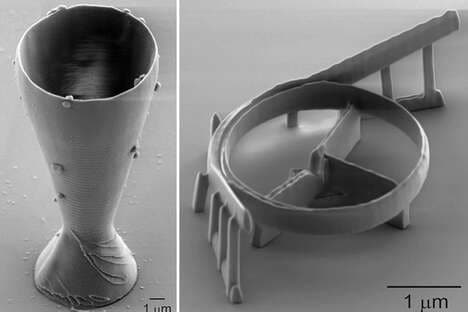
To etch in the details, the determined scientists concentrated beams of gallium ions on the surface of the chips.
Implications - The nano-Bible was created as part of an education program that was aimed at creating an interest in nanoscience among young adults. The makers of the teeny-tiny Bible are planning on blowing it up in a seven-by-seven meter poster so that people can easily read it.
What Makes This Trend Stand Out
- Nanoscience Education
- Creating educational materials and experiences focused on nanoscience to engage young adults in the field.
- Miniaturization Technology
- Developing cutting-edge techniques to create smaller and more intricate structures.
- Microscopic Text Printing
- Exploring methods and technologies to print text in minuscule sizes.
Sectors Adopting This
- Education
- Integrating nanoscience education into school curriculums and creating interactive learning materials.
- Technology
- Advancing miniaturization technology for various applications, such as electronics and healthcare devices.
- Printing
- Innovating printing techniques to enable the production of microscopic text on various surfaces.