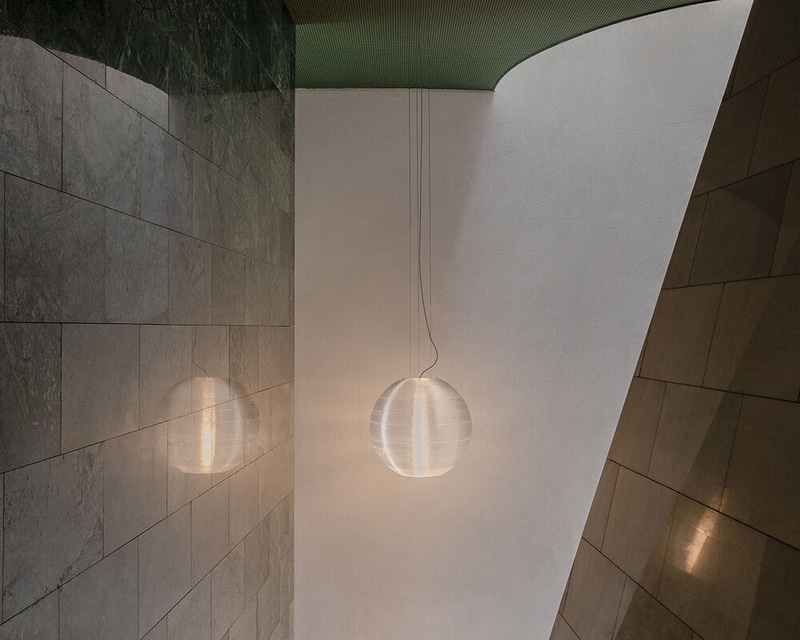
The Tierra, Mar y Aire collection by Faro Barcelona is a series of luminaires designed by Héctor Serrano using large-scale 3D printing and recycled materials. Each piece is produced locally and on demand without molds, reducing waste while enabling variation in form. The collection is divided into three families inspired by natural elements, with materials including plant-based bioplastics, recycled fishing nets, and PET-derived plastics. These production methods emphasize circularity and lower environmental impact while maintaining structural integrity.
The designs feature striated surfaces created directly through the printing process, resulting in a textured finish that reflects what the studio describes as digital craftsmanship. Forms draw from references such as beehives, sea urchins, and air bubbles, producing organic geometries that shift in appearance when illuminated. The absence of post-processing highlights the raw qualities of each material, while variations in scale and shape allow the luminaires to be arranged individually or in clustered compositions within architectural spaces.
Image Credit: Faro Barcelona
What's Driving This Trend
- Local On-demand Additive Manufacturing
- Localized large-scale 3D printing supports on-demand production models that shrink inventory, cut shipping emissions, and enable highly customized lighting geometries.
- Circular Material Systems
- The integration of plant-based bioplastics, recycled fishing nets, and PET-derived plastics highlights material loops that reduce waste streams and create branded sustainability narratives.
- Digital Craftsmanship Aesthetics
- Visible layer textures and form-driven designs produced directly by printers create a new aesthetic language that blends artisanal appeal with parametric variability.
Who This Affects Most
- Architectural Lighting
- Specification-driven projects can leverage customizable, locally produced luminaires to deliver unique lighting compositions that respond to site-specific architectural programs.
- Furniture and Interior Design
- Interior products and furniture lines could incorporate printed luminaires as integrated design elements that coordinate materiality and texture across spaces.
- Sustainable Manufacturing
- Manufacturing operations focused on circularity stand to benefit from zero-mold additive processes that lower tooling costs and simplify material recovery pathways.