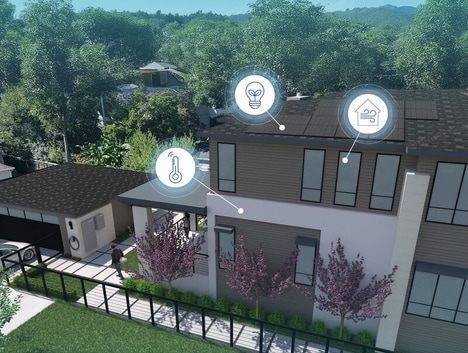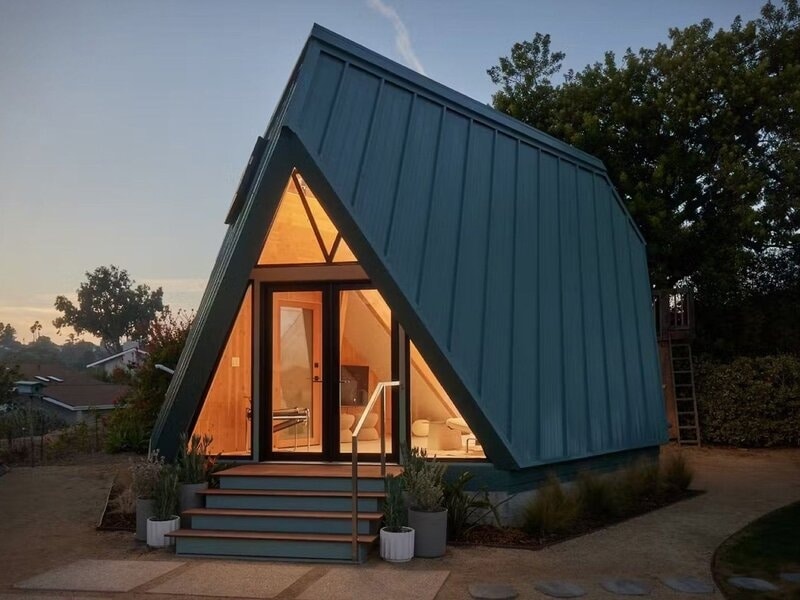
The Polyhaus Tetra-One is a compact accessory dwelling unit that advances wildfire protection while rethinking affordable housing. Instead of relying on conventional timber framing, its structure uses cross-laminated panels sourced from forest restoration projects, wrapped in insulated metal layers that create a sealed, highly fire-resistant envelope. Robotic fabrication eliminates air gaps, further boosting durability and energy efficiency.
At 540 square feet with a 100-square-foot mezzanine loft, the home fits a kitchen, bathroom, living area, and sleeping space into a small footprint. Prefabricated components allow the entire unit to be assembled in just three days, offering a rapid solution to urgent housing needs. By tying its material sourcing to forest management, Polyhaus links construction directly to wildfire prevention. Positioned at around $300,000, the Tetra-One highlights how resilience, speed, and sustainability can intersect in California’s housing future.
Image Credit: Polyhaus
Key Themes Behind This Trend
- Fire-resistant Construction
- Innovations in fire-resistant materials, like those used in the Tetra-One, offer new ways to safeguard homes from wildfires, potentially redefining construction standards in fire-prone areas.
- Robotic Prefabrication
- The use of robotic technology in prefabrication speeds up home construction, reducing labor costs and minimizing human error, thereby transforming the affordability and accessibility of housing.
- Sustainable Material Sourcing
- Sourcing materials from forest restoration projects merges sustainability with construction, creating opportunities to support environmental conservation while building homes.
Where This Applies
- Modular Housing
- The modular housing industry could benefit from integrating fire-resistant and energy-efficient features to attract consumers in high-risk areas, enhancing both safety and appeal.
- Green Construction
- Green construction is at the intersection of eco-friendly building practices and performance enhancements, leveraging sustainable materials to meet modern environmental and housing challenges.
- Wildfire Mitigation Services
- The growing need for integrated wildfire protection strategies presents significant opportunities for firms specializing in fire resistance technologies and preventative measures.