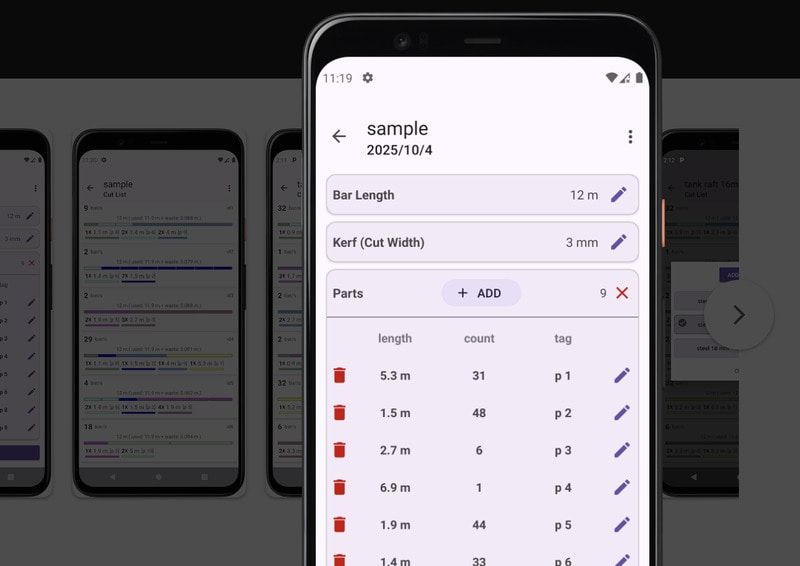
Steel Bar Cut List Optimizer is a software tool designed to improve efficiency in cutting steel bars and other linear materials. The platform generates optimized cut lists to minimize waste and reduce material costs, supporting industries that work with reinforcement steel, pipes, tubes, aluminum, wood, and similar linear products.
Users input stock lengths and required cut dimensions, and the tool calculates cutting patterns that maximize material utilization while achieving precise results. By streamlining the planning process, the software helps manufacturers, fabricators, and construction professionals save time, reduce errors, and improve overall productivity. Its application is particularly relevant for businesses seeking cost-effective solutions in materials management and production planning, offering a systematic approach to minimize scrap and support sustainable operations.
Image Credit: Steel Bar Cut List Optimizer
What's Driving This Trend
- AI-driven Cut Optimization
- Advanced algorithms that tailor cutting patterns to real-time inventory and demand enable substantial reductions in material waste and procurement costs.
- Circular Materials Management
- A systems-level focus on minimizing scrap and repurposing offcuts presents pathways to close-loop supply chains and extend material lifecycles.
- Digital Twin Cutting Simulation
- Virtual replicas of production lines that simulate cutting scenarios offer precise forecasting of yield and throughput without disrupting physical operations.
Who This Affects Most
- Construction Materials
- Optimization of rebar and piping cuts can meaningfully lower project budgets and reduce on-site waste streams for large-scale builds.
- Metal Fabrication
- Integration of cut-list software with shop-floor equipment carries the potential to streamline nesting, reduce machine time, and improve order turnaround.
- Furniture and Woodworking
- Precise linear-material planning for lumber and panel stock can increase yield from raw boards and enable new low-waste product designs.