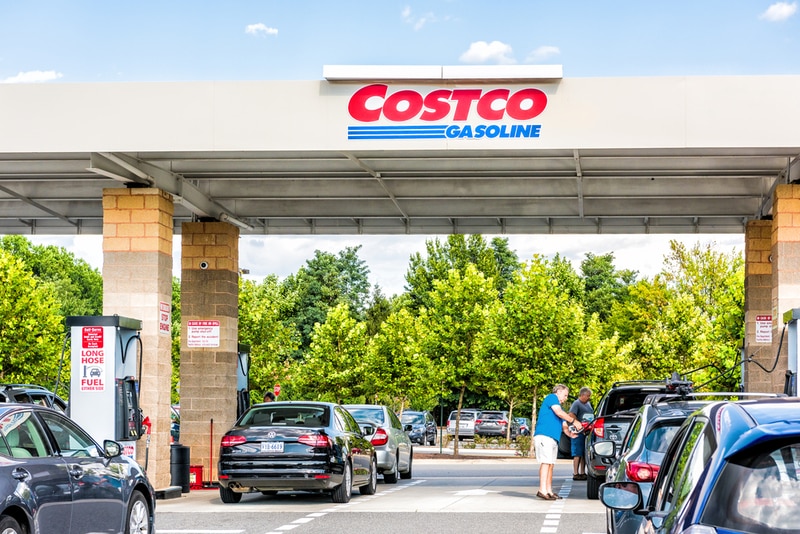
Costco Wholesale will open its first standalone gas station in June, marking the club retailer's expansion of fuel services beyond its warehouse sites.
The new format was introduced as a dedicated fueling location, featuring Costco-branded pumps and membership-based pricing. Local permitting and site selection guided the rollout, with the debut positioned to test demand for offsite fueling among existing members. The standalone station retains Costco's payment and membership model while adapting to a smaller footprint and street-facing access. The company framed the launch as an operational experiment to reach customers who want Costco fuel without visiting a full warehouse.
For consumers, the move promises more convenient access to Costco’s typically lower gasoline prices and could shift expectations for membership-based services, signaling a trend toward specialized, off-premise retail extensions.
Image Credit: Andriy Blokhin / Shutterstock
What Makes This Trend Stand Out
- Membership-based Fueling Expansion
- A shift toward subscription or member-tied fuel pricing could redefine loyalty economics by driving recurring, location-agnostic revenue streams for retailers.
- Offsite Retail Extensions
- Standalone service outposts separate from flagship locations may enable brands to capture incremental footfall and extend core services into denser urban corridors.
- Street-facing Micro-fueling Formats
- Smaller, street-accessible fueling sites that retain brand identity point to a model for high-frequency, convenience-oriented customer interactions in constrained footprints.
Sectors Adopting This
- Retail Fueling
- Integrating branded, membership-priced pumps into non-warehouse sites suggests new competitive dynamics around price leadership and network density.
- Membership Retailers
- Clubs and subscription retailers can leverage off-premise service nodes to broaden value propositions beyond in-store assortment and drive incremental member engagement.
- Urban Real Estate and Site Selection
- Demand for small-format, high-visibility parcels for service extensions highlights opportunities in adaptive leasing, micro-site optimization, and permittability expertise.