
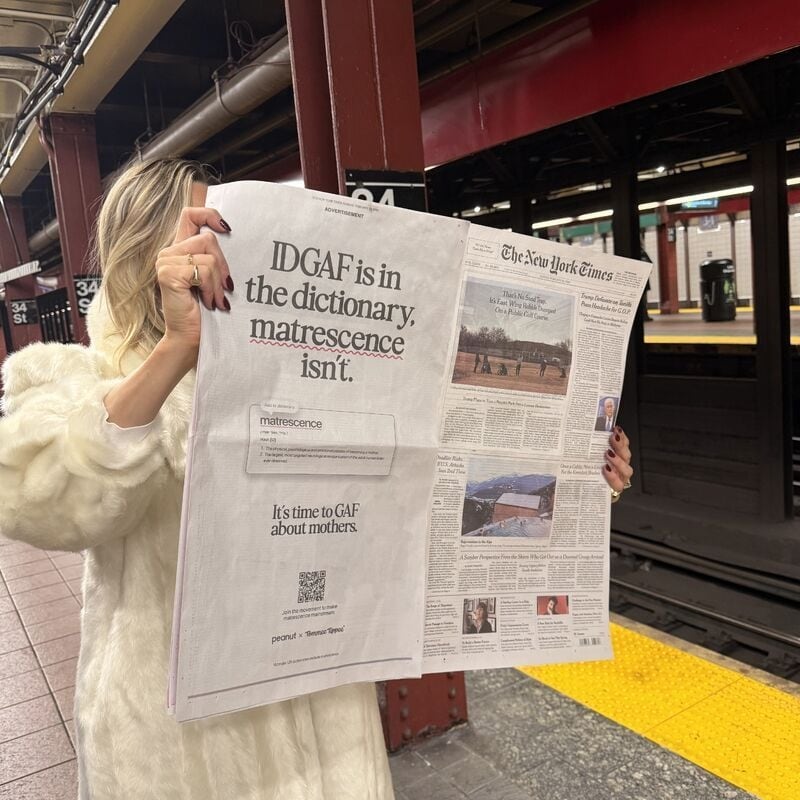
Matrescence is a word coined in 1973 by anthropologist Dana Raphael that describes the developmental transition of becoming a mother and the many mental and physical experiences that accompany it—but it's not officially recognized in the dictionary, and Peanut and Tommee Tippee are campaigning to change that.
Together, Peanut and Tommee Tippee took out a full-page ad in The New York Times, calling attention to the fact that "IDGAF" has landed a spot in the dictionary, but not matrescence. The print campaign has a QR code that links to a petition for this word to get added to dictionaries and tech devices so that it won't be autocorrected, and women will feel less alone when it comes to experiencing profound biological, psychological, and emotional shifts.
Why This Trend Is Growing
- Maternal Identity Language
- Growing public attention to terms like 'matrescence' reveals consumer demand for validated language that normalizes postpartum emotional and physiological change.
- Brand-led Lexicon Campaigns
- Corporate-backed efforts to secure dictionary recognition indicate a new avenue for brands to shape cultural vocabulary and public understanding of life-stage experiences.
- Print-to-digital Petitioning
- The use of print ads with QR codes linking to petitions highlights integrated analog–digital strategies that mobilize niche communities quickly.
Industries Being Reshaped
- Consumer Baby Products
- Products and platforms that incorporate maternal wellness language could differentiate by addressing emotional transition alongside physical caregiving needs.
- Digital Language and OS Platforms
- Autocorrect and dictionary services present a clear opening for curated lexicons that reduce stigma by recognizing life-stage terminology across devices.
- Media and Advertising
- Publishers and advertisers that amplify underrepresented life-stage vocabularies could reshape narratives and drive deeper audience loyalty through cultural advocacy.