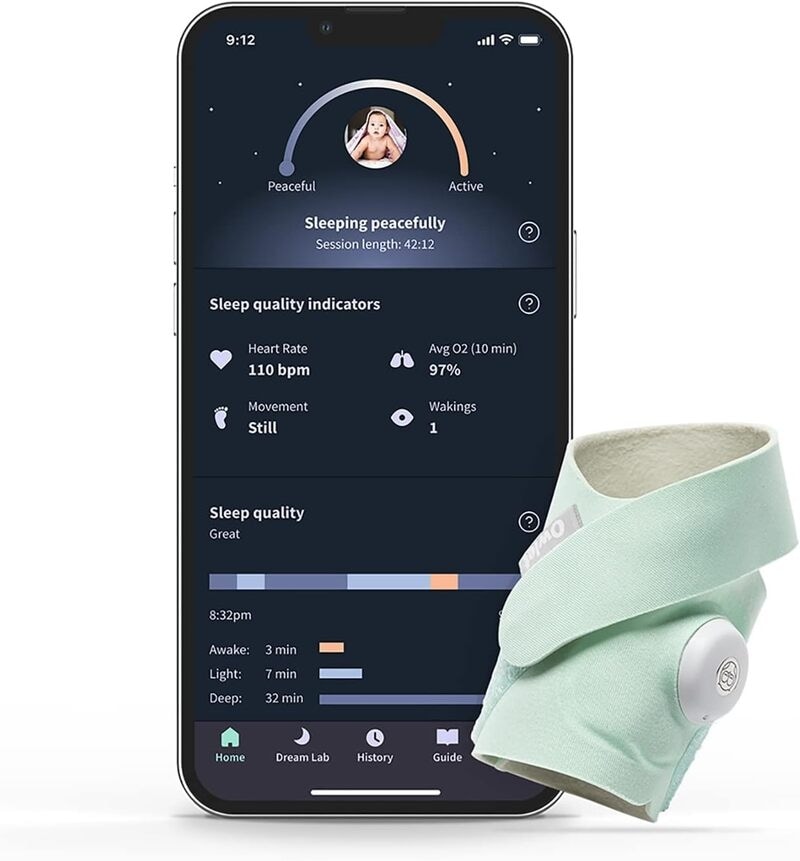
The 'Owlet Dream Sock Plus' is an FDA-cleared wearable baby sleep tracker from Owlet, designed to monitor infants' heart rate, blood oxygen and sleep patterns while they rest. The system uses a foot-worn fabric sock with an embedded photoplethysmography (PPG) sensor, a base station and an app to send alerts when readings deviate from a learned baseline.
The kit ships with multiple sock sizes to fit newborns through toddlerhood and offers a Plus bundle that extends sizing up to preschool ages; it provides real-time oxygen readings for 1–18 months and maps sleep stages, wakings and noise alongside heart-rate data. The device is FSA/HSA-eligible, retails at about $299 and does not require ongoing subscription fees.
For parents, the Dream Sock Plus delivers continuous biometric monitoring that can reduce nighttime anxiety and help track sleep regressions or illness-related changes in breathing and heart rate. Its FDA clearance and expandable sizing make it a practical choice for families seeking data-driven reassurance during early childhood sleep.
Image Credit: Owlet
What Makes This Trend Stand Out
- Infant Wearable Biometrics
- Continuous foot-worn PPG sensors and integrated sleep-stage mapping create new avenues for noninvasive, longitudinal infant physiological datasets that can reshape pediatric monitoring.
- Regulatory-cleared Consumer Health Devices
- FDA clearance of a consumer-focused baby tracker signals a shift toward medical-grade regulation for at-home health hardware that blurs the line between wellness gadgets and clinical devices.
- Subscription-free Smart Hardware
- One-time-purchase models with bundled hardware and no recurring fees highlight market demand for transparent pricing that prioritizes ownership over SaaS-style subscription lifecycles.
Sectors Adopting This
- Pediatrics
- Clinicians can access richer remote-monitoring data streams from validated wearables, enabling earlier detection of illness-related deviations in infant vitals beyond periodic office visits.
- Consumer Health Technology
- Product developers and platforms are positioned to incorporate medical-grade sensors into mainstream consumer devices, elevating accuracy expectations and competitive differentiation.
- Home Sleep Monitoring
- In-home biometric sleep solutions for infants expand the scope of sleep tech by combining safety-focused alerts with longitudinal analytics suited to early-childhood care.