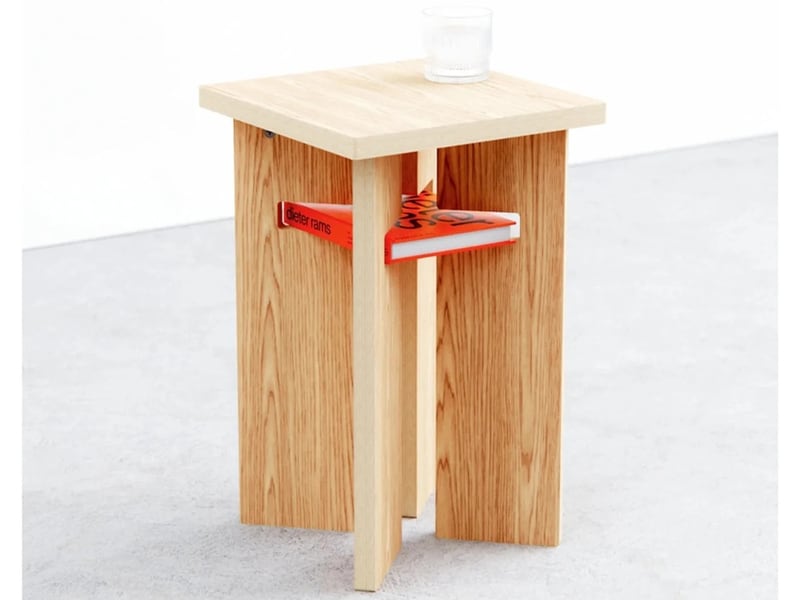
The Notch side table by Liam de la Bedoyere is a side table that integrates storage directly into its structure through a carved channel within its legs. Rather than adding shelves or compartments, the inner faces of the legs are shaped to create a vertical slot that allows a single book to slide into place. The book is held upright within the frame, becoming part of the table’s overall profile while keeping the tabletop fully clear for everyday use.
The table is constructed from solid wood, with a pared-back form that emphasizes proportion and material. The notch is precisely dimensioned to fit standard book sizes, creating a fixed function rather than adjustable storage. Its geometry relies on clean intersections and subtle spacing to maintain stability while supporting the integrated slot. The design uses subtraction as its primary gesture, removing material to define both structure and utility within a compact footprint.
Image Credit: Liam de la Bedoyere, Bored Eye Design
Why This Trend Is Growing
- Integrated Structural Storage
- The embedding of functional storage within load-bearing elements creates furniture that consolidates utility and form, enabling pieces that reduce clutter without added attachments.
- Subtractive Design Aesthetics
- Designs that prioritize material removal to reveal function and proportion foster minimalist objects where negative space defines use and visual identity.
- Object-as-profile Furniture
- Treating everyday items like books as integral components of a piece’s silhouette encourages products that change appearance through user-curated content.
Industries Being Reshaped
- Furniture Manufacturing
- Precision carving and joinery techniques driven by integrated features can prompt retooling of production lines toward bespoke, multifunctional units.
- Small Space Interiors
- Compact living markets benefit from built-in, low-footprint solutions that merge storage and surface area to maximize utility in constrained floorplans.
- Sustainable Wood Supply
- Demand for solid-wood pieces designed around minimal material use highlights opportunities for certified, high-quality timber sources and waste-reduction supply chains.