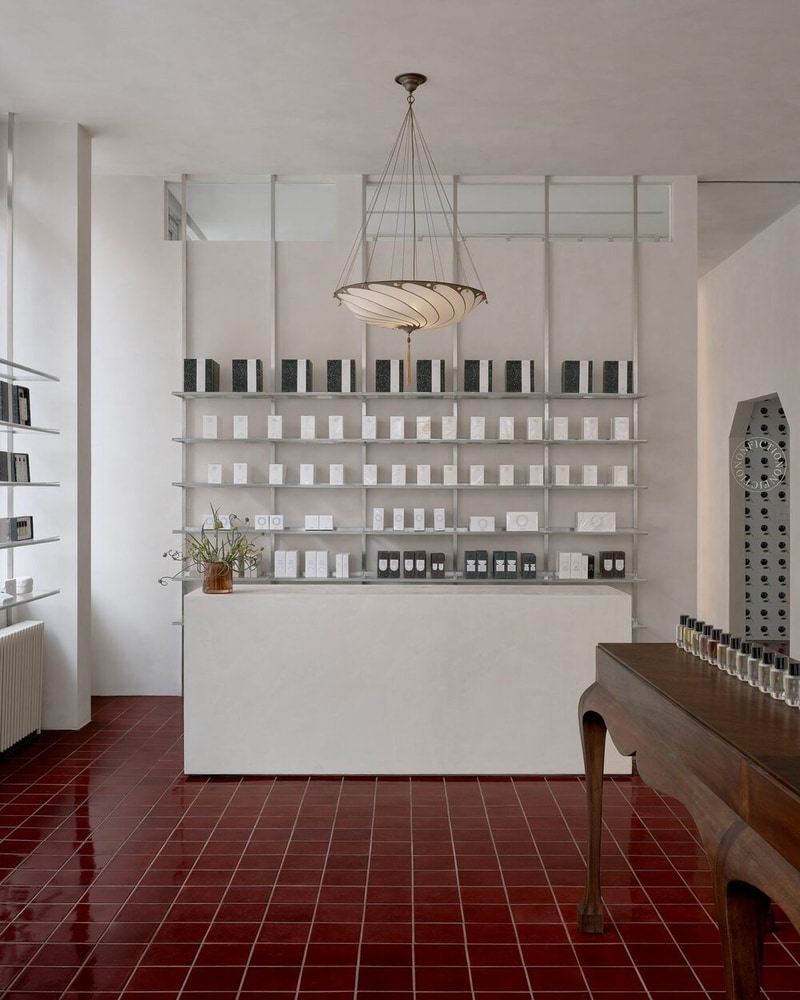
NONFICTION New York, designed by Charlap Hyman & Herrero, is located at 38 Orchard Street in Manhattan’s Lower East Side as the brand’s first US retail space. The interior pairs limewashed walls with glossy oxblood floor tiles, creating contrast across surfaces. A tiled niche featuring a hand-painted black rose motif by artist Pilar Almon is integrated into the space, alongside geometric elements including a triangular entrance structure and a mirrored column with amber lighting.
The store includes a mix of furniture from different periods, such as an 18th-century Queen Anne candlestand and a contemporary mahogany table by Doug McCollough. Display areas present the brand’s full fragrance lineup, including 22 signature scents, along with a New York-exclusive perfume tag featuring the rose motif. The layout organizes retail and display elements across a single open plan, combining shelving, tables, and architectural features within the same interior.
Image Credit: Sean Davidson
What Makes This Trend Stand Out
- Heritage-contemporary Fusion
- Combining period antiques with modern custom pieces creates opportunities for hybrid retail environments that reframe brand heritage through contemporary context.
- Artist-branded Retail Motifs
- Artist-created signature motifs integrated into store fixtures enable narrative-driven product exclusives tied to locality and limited-edition storytelling.
- Integrated Architectural Display
- Blurring the line between architecture and merchandising through structural displays and built-in niches allows products to function as part of the spatial composition rather than standalone items.
Sectors Adopting This
- Luxury Fragrance Retail
- Boutique perfume sellers can leverage curated interiors and exclusive scent motifs to differentiate product lines and command premium pricing.
- Interior Design and Fit-out
- Design firms focusing on bespoke retail buildouts gain potential by offering integrated sculptural elements and artist collaborations that become part of the brand identity.
- Artisan Home Furnishings
- Makers of bespoke furniture and decorative tiles can capitalize on demand for one-of-a-kind pieces that bridge historic craftsmanship and contemporary retail aesthetics.