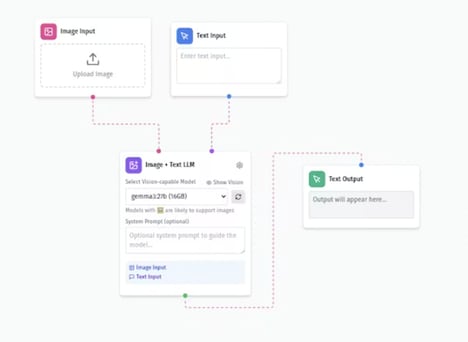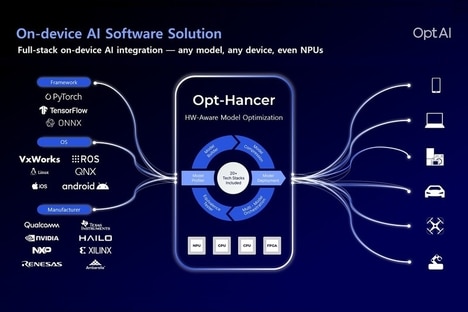
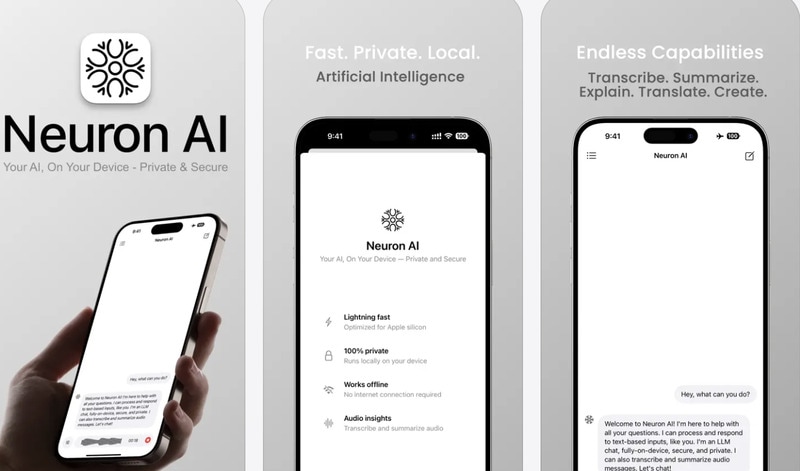
Neuron AI is an AI platform designed to operate entirely on a user’s device, emphasizing privacy, security, and local processing speed. Unlike cloud-based AI solutions, it does not require an internet connection and ensures that all data remains fully on the device, reducing exposure to external storage or third-party access.
This architecture allows for AI-driven tasks such as text generation, analysis, or automation to be performed offline, which can be especially relevant for users concerned about data confidentiality or latency. From a business perspective, Neuron AI provides an alternative model for deploying AI where compliance, data sovereignty, or security are critical. By combining local computation with AI capabilities, it demonstrates a growing trend toward decentralized and user-controlled AI solutions that prioritize privacy without compromising functionality.
Image Credit: Neuron AI
What Makes This Trend Stand Out
- On-device Privacy AI
- A shift toward local model execution that keeps sensitive data on-device, reducing reliance on cloud storage and third-party access.
- Offline Large Language Models
- Models capable of running without internet connectivity that lower latency and expand AI utility in restricted or remote environments.
- Decentralized AI Ecosystems
- Distributed architectures that allocate compute across endpoints and create new paradigms for data sovereignty and collaborative intelligence.
Sectors Adopting This
- Healthcare
- Clinical workflows and patient records that remain on medical devices, offering enhanced compliance with privacy regulations and minimized exposure of health data.
- Financial Services
- On-device analytics for transaction monitoring and risk scoring that reduce the need to send sensitive financial data to external servers.
- Consumer Electronics
- Smartphones and wearables embedding full AI stacks locally that transform user experiences by enabling private, low-latency personalization.