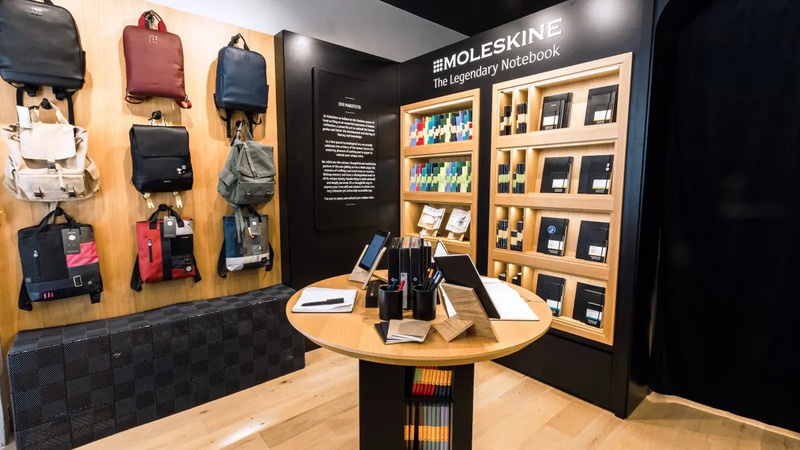
Moleskine introduced its first neighborhood concept store in the United States with a compact 280-square-foot boutique on New York City’s Upper East Side. The Milan-based notebook brand positioned the space as a local “creative resource,” signaling a deliberate shift toward smaller, community-embedded locations in its U.S. retail network. This opening added to the brand’s existing Manhattan footprint while redefining how it engages nearby residents.
The Lexington Avenue boutique evolved from a neighborhood experiment Moleskine ran at Moynihan Train Hall in late 2023. Housed in a pre-war building with a Gothic-inspired facade, the interior places an embossing and personalization machine in full view from the street, a first for the brand in the U.S. The store also unveils a new “signature wall” display, filling the window with a visually striking grid of notebooks.
For consumers, the boutique offers a tactile, analog counterbalance to digital daily life, emphasizing personalization and slow, in-person browsing. Its neighborhood-first strategy aligns with demand for smaller, experiential retail that feels embedded in local culture rather than tourist-heavy corridors.
Image Credit: Moleskine
Part of the cluster
Participatory Retail
Stores are becoming hands-on learning environments for shoppers
Explore the cluster

Key Themes Behind This Trend
- Community-embedded Retail Spaces
- Retailers are increasingly embracing smaller, community-focused locations that foster a deeper connection with local residents, offering a personalized shopping experience.
- Experiential Retail Design
- Brands are innovating their store layouts to create immersive and aesthetic environments, making the shopping experience more engaging and visually appealing.
- Analog Experiences in Digital Age
- There is a growing market appeal for products and spaces that offer tangible, sensory-rich experiences as an antidote to the pervasiveness of digital interactions.
Where This Applies
- Stationery and Arts Retail
- The stationery industry is diversifying its retail approach by opening niche boutiques that promote creative uses of traditional products and offer personalized customer interactions.
- Urban Real Estate Development
- Neighborhood-specific retail locations highlight opportunities in the real estate sector to cater to community-centric businesses seeking smaller and more intimate spaces.
- Retail Technology and Personalization
- Advancements in biometrics and personalized product offerings are becoming integral to experiential retail, allowing customers to engage with brands on a personal level.