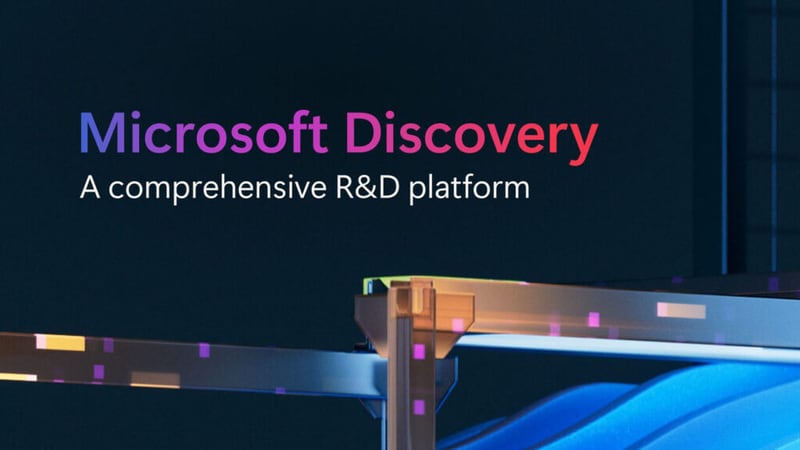
Microsoft introduced Microsoft Discovery, an enterprise platform designed to support AI-native biotech research workflows, featuring agentic automation, graph-based knowledge systems and high-performance computing infrastructure. The platform was built for regulated scientific environments with support for tenant deployment, provenance tracking, secure model fine-tuning and integration with proprietary datasets and tools.
Microsoft emphasized operational priorities including scalable orchestration for compute-intensive workloads, reproducibility for scientific evidence generation and confidential compute architectures that allow models to run inside partner cloud environments. The company also highlighted Azure’s independent GxP supplier audit as validation for regulated workloads and enterprise compliance readiness.
For biotech startups and enterprise partners, Microsoft Discovery aims to reduce infrastructure friction while accelerating AI-driven experimentation, collaboration and evidence generation, reflecting broader demand for secure, auditable AI systems in regulated life-sciences research.
Image Credit: Microsoft
What's Driving This Trend
- Agentic Automation for Biotech
- Autonomous, multi-agent orchestration of experimental workflows presents opportunities to transform lab throughput and decision-making by embedding procedural heuristics and real-time optimization into routine research tasks.
- Graph-based Knowledge Systems
- Knowledge graphs that integrate provenance-rich experimental data and models create potential for more coherent hypothesis generation and cross-study inferencing across fragmented biomedical datasets.
- Confidential Compute for Regulated Research
- Secure enclaves and tenant-isolated model execution offer a path to reconcile collaborative AI development with strict data sovereignty and compliance requirements, reshaping partnership models in sensitive life-science projects.
Who This Affects Most
- Biopharma R and D
- Tightly coupled AI-native platforms could upend traditional drug discovery pipelines by enabling faster candidate triage, reproducible evidence trails and integrated computational-experimental loops.
- Cloud Infrastructure Providers
- Providers that embed compliant high-performance compute and audit-ready tooling may capture new enterprise demand for turnkey regulated AI stacks tailored to scientific customers.
- Regulatory Compliance and Auditing Services
- Services that specialize in validating AI models, provenance records and GxP-aligned deployments are positioned to redefine compliance assurance by offering continuous, machine-verifiable oversight.