The lightest metal on earth has been developed and it has been dubbed microlattice. A hundred times lighter than styrofoam, microlattice may be able to sit on a dandelion without crushing its seeds, but don't be deceived by this feat. Microlattice might appear delicate, but it can bear a 50% compression stress load. Impressed yet?
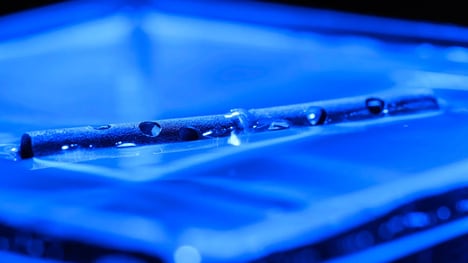
Created by HRL Laboratories in collaboration with researchers at Caltech and UC Irvine, microlattice is purported for aerospace structural components. As light as a feather and strong as a spiderweb, microlattice achieves these wondrous qualities through a series of hollow tubes. According to Popular Science, "Researchers exposed a light sensitive liquid to UV light through a patterned mask, which created a three-dimensional photopolymer lattice. They then deposited a layer of nickel-phosphorous onto the polymer lattice, which was then etched." The result being microlattice.
What Makes This Trend Stand Out
- Microlattice
- Microlattice, the lightest metal on earth, offers disruptive innovation opportunities in aerospace structural components.
- Lightweight Materials
- The development of microlattice highlights the trend towards lightweight metals, creating opportunities in various industries.
- Advanced Manufacturing
- The production process of microlattice using 3D photopolymer lattice and etching showcases the potential for advanced manufacturing techniques.
Sectors Adopting This
- Aerospace
- Microlattice's strength and lightweight properties make it a potential game-changer in the aerospace industry, revolutionizing structural design and fuel efficiency.
- Materials Science
- The development of microlattice highlights the importance of materials science in creating innovative solutions for lightweight and high-strength materials.
- Manufacturing
- The manufacturing industry can explore advanced techniques like 3D photopolymer lattice and etching to produce lightweight and strong metals for various applications.