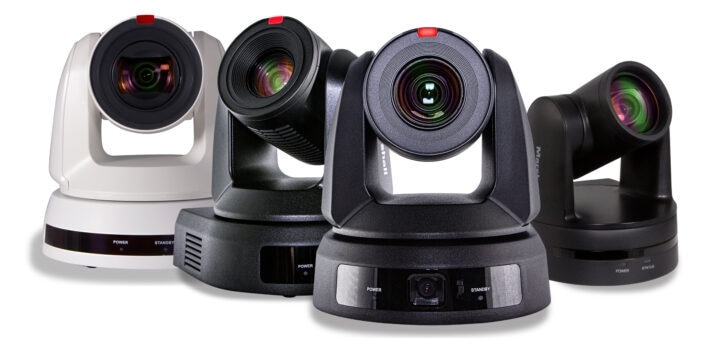
Marshall Electronics has launched two new PTZ cameras under its CV600 series. This new evolution of the brand's camera line delivers new AI-powered tracking, multiple outputs, and flexible installation options, allowing users to achieve more across unique environments like corporate, education, live events, and broadcast.
The CV625 is jam-packed with upgraded features, such as a wide-angle POV camera, 4K auto-tracking, picture-in-picture modes and improved subject detection. The camera also has a 25x optical zoom, HDMI support, 3G-SDI, RTSP streaming, Ethernet, and USB 3.0 outputs.
The CV612 also has features like AI facial learning, 12x optical zoom, 2-megapixel sensor, 3G-SDI, HDMI, RTSP and USB-C outputs. It can be controlled using LAN, RS232, Visca, Visca-over-IP, Pelco and Onvif, and an IR remote.
Image Credit: Marshall Electronics
What's Driving This Trend
- AI-powered Camera Technology
- AI-enhanced tracking and subject detection in PTZ cameras represent a disruptive leap forward in automated surveillance capabilities.
- Multi-functional Streaming Solutions
- Equipping cameras with multiple output options like HDMI, 3G-SDI, and USB enhances versatility for diverse broadcasting environments.
- User-friendly Camera Control Systems
- The integration of various control protocols such as LAN and Visca-over-IP revolutionizes ease of use and adaptability in camera operations.
Who This Affects Most
- Consumer Electronics
- Advancements in AI-powered PTZ cameras offer transformative potential for the home security and entertainment sectors.
- Broadcast Media
- AI-enabled features in PTZ cameras are poised to simplify operations and enhance the quality of live broadcasting.
- Education Technology
- Leveraging AI-powered cameras in educational institutions can dramatically improve remote learning and lecture capture capabilities.