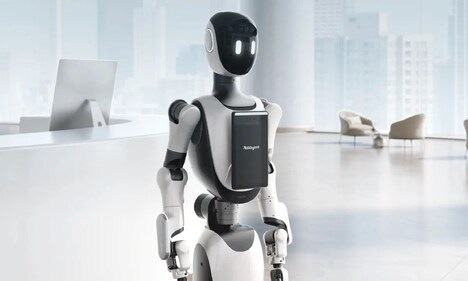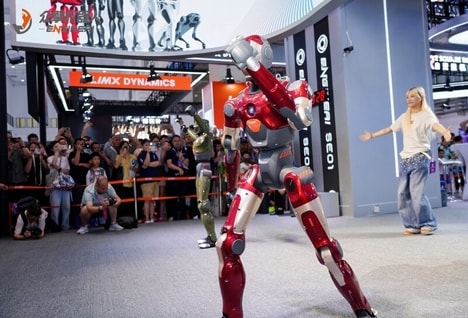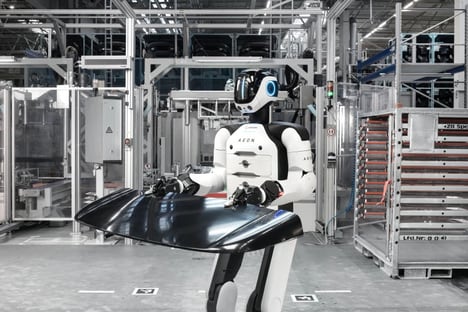
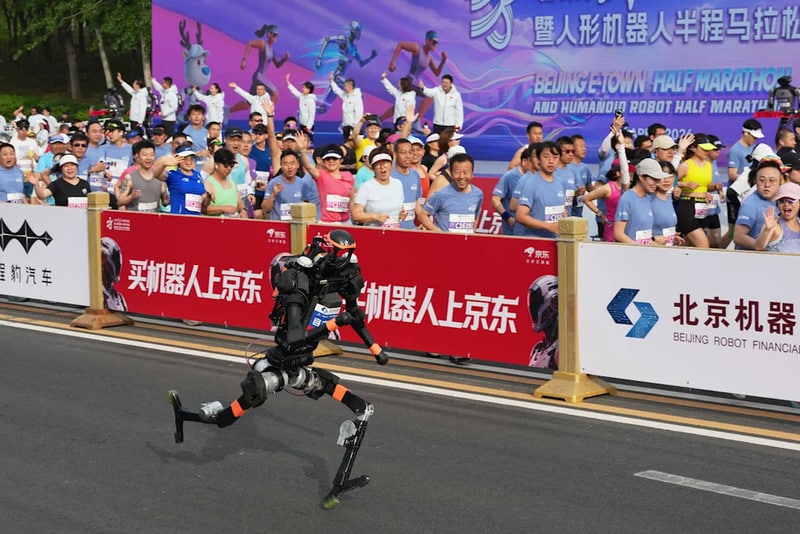
Honor debuted an autonomous humanoid marathon runner that completed a 21-kilometer half-marathon in Beijing, finishing in 50 minutes and 26 seconds and outperforming the human world record. The robot, built by the smartphone maker’s research team, ran with 95 cm legs and featured a powerful liquid-cooling system designed in-house.
Event organizers said about 40% of entrants navigated the course autonomously while others were remotely controlled; Honor entered multiple models and placed runners-up with autonomous machines clocking roughly 51 and 53 minutes. A separate remotely controlled Honor unit posted a 48-minute, 19-second finish under different scoring rules, and robots also served roles like traffic direction during the event.
For consumers and industry, the race signaled faster progress toward practical humanoid mobility, with cooling and structural reliability advances applicable to industrial and service robots. The result highlights how competition-driven testing is accelerating embodied AI from labs toward real-world tasks.
Image Credit: AP Photo/Ng Han Guan
What's Driving This Trend
- Competitive Robotics Benchmarking
- Demonstrations like marathon races are creating standardized performance metrics that reveal real-world reliability and speed trade-offs across humanoid platforms.
- Liquid-cooled Bipedal Mobility
- Advances in integrated liquid-cooling and structural design are enabling sustained high-speed bipedal locomotion without thermal throttling.
- Embodied AI Transition to Field Deployment
- Competition-driven testing is accelerating the move of embodied AI from laboratory prototypes to robust systems capable of operating in open, dynamic environments.
Who This Affects Most
- Logistics and Warehousing
- High-speed, thermally managed humanoid robots could transform order picking and last-mile movement by operating continuously in temperature-sensitive, dense environments.
- Healthcare and Physical Therapy
- Reliable bipedal platforms offer the potential for autonomous gait-assist devices and adaptive rehabilitation aides that mimic human movement patterns.
- Public Safety and Crowd Management
- Mobile humanoids capable of navigating urban courses may serve as persistent, autonomous agents for traffic direction, incident response observation, and flow monitoring.