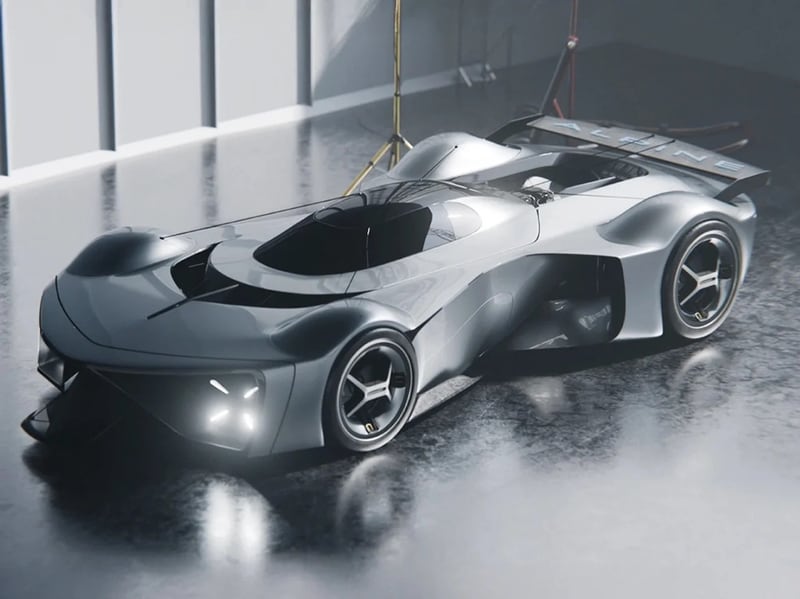
HakHyeon Lee introduced the Alpine Horizon concept, a closed-cockpit hypercar study that reimagines driver protection with a magnetic levitation cockpit designed to float the driver pod above the chassis. The concept ties the levitating capsule to the chassis with high-strength wire tethers and positions batteries low in the frame to power the electromagnetic system. It was presented as a 2026 concept reflecting Alpine’s endurance aesthetics rather than a production F1 machine.
Lee’s design blends Le Mans prototype proportions—wide wheel arches, long diffuser and enclosed canopy—with a gimbal-mounted seat inside the floating pod to stabilize the driver during extreme forces. The concept references endurance racing safety conventions while proposing electromagnetic rails under the capsule to repel and absorb track impacts. Lee also framed the Horizon against Alpine’s real-world motorsport shifts in 2026.
For consumers and enthusiasts the Horizon highlights a trend toward isolating occupants from vehicle dynamics to prioritize safety and comfort in performance contexts. As a concept prototype, it showcases how magnetic suspension principles could change cockpit ergonomics and extraction procedures in closed-cell race cars, signaling future experiments rather than immediate road use.
Image Credit: HakHyeon Lee
What's Driving This Trend
- Magnetic Levitation Cockpits
- A floating driver capsule using electromagnetic suspension suggests new vehicle architectures that decouple occupant motion from chassis dynamics for enhanced impact management.
- Isolated Occupant Systems
- The enclosed gimbal-mounted cockpit concept points to designs where occupant environments are mechanically separated from external forces to prioritize stability and comfort during extreme maneuvers.
- Low Center Energy Architecture
- Positioning heavy battery packs low in the frame combined with elevated cabins highlights configurations that redistribute mass and electromagnetic systems to reconcile performance with levitation requirements.
Who This Affects Most
- Motorsport Engineering
- Racing teams and constructors could see vehicle layouts evolve around levitating pods and tether systems that change crash dynamics, driver extraction, and team logistics.
- Automotive Safety Systems
- Suppliers of seats, restraints and impact-absorbing structures may be challenged to develop integration-ready components for floating capsules and electromagnetic rail absorption behavior.
- Battery and Electromagnetic Suppliers
- Manufacturers of high-density batteries and electromagnetic hardware might enable compact, low-mounted energy packs and rails that support continuous levitation and rapid energy modulation.