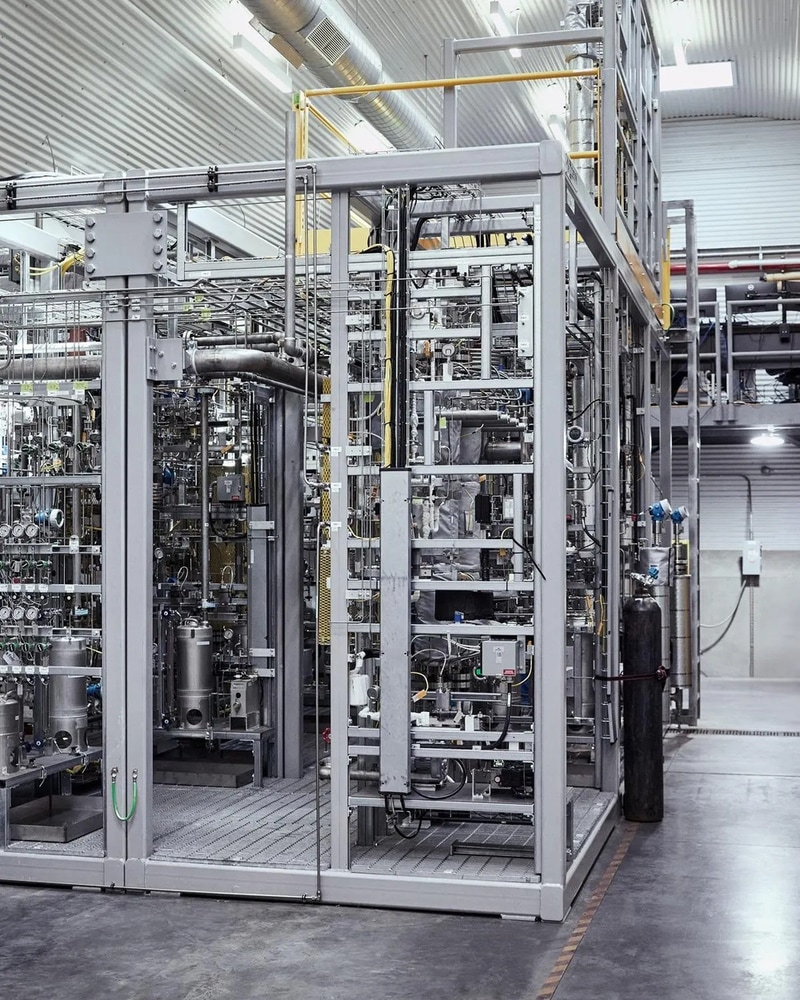
AIRCO introduced the MAD Fuel System, a pair of 20-foot containerized units that produce aviation-grade fuel by combining electricity, water and carbon dioxide. Designed to run on grid or distributed power, the system uses AIRMADE chemistry and proprietary catalysts to synthesize hydrocarbons such as jet fuel, diesel or gasoline on demand.
The MAD units electrolyze atmospheric water to yield hydrogen, then react that hydrogen with captured CO2 via a compact Fischer–Tropsch-like process to make finished fuel without external blending. AIRCO demonstrated the approach powering a jet drone and said each first-unit will output hundreds of gallons per month, with plans to scale to thousands of gallons as production ramps.
For operators, MAD replaces long, risky fuel supply lines with localized production, lowering logistical cost and vulnerability in contested zones. By enabling on-site, power-driven fuel generation, the technology aligns with trends in distributed energy, autonomous logistics and expeditionary operations.
Image Credit: AIRCO Andrew Kenney
What's Driving This Trend
- Containerized Onsite Fuel Production
- Localized containerized systems that synthesize aviation-grade hydrocarbons promise to displace extended fuel supply chains and reduce logistical vulnerabilities in forward operations.
- Power-to-liquid Decentralization
- Distributed electrolysis-to-synthesis platforms enable modular conversion of electricity, water and CO2 into transport fuels, creating opportunities to reconfigure fuel economics around power availability rather than refinery output.
- Expeditionary Energy Autonomy
- Self-contained fuel-making units support sustained missions in contested or remote theaters by decoupling operational endurance from traditional resupply routes.
Who This Affects Most
- Military Logistics
- Forward-deployable fuel synthesis alters sustainment models by shifting risk away from long convoys and toward mobile production assets co-located with forces.
- Aviation Fuel Supply
- On-demand synthesis of jet-grade hydrocarbons introduces new sourcing paradigms that could complement or compete with conventional refinery and pipeline networks.
- Remote Energy Services
- Modular fuel generators present possibilities for energy-service providers to offer integrated power-to-fuel solutions in off-grid industrial, mining and island communities.