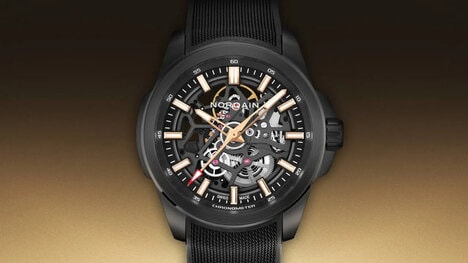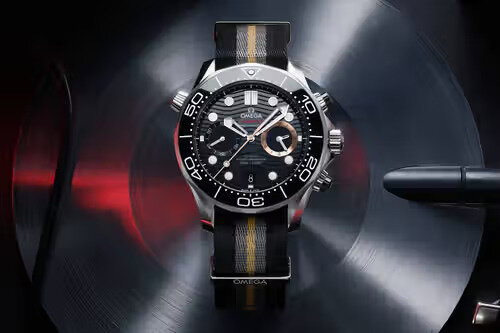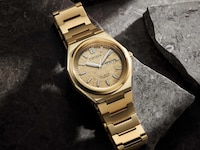

Lebond has teamed up with architect Norman Foster to create the Natural Titanium Watch, a dual-timepiece designed for travellers. It marks Foster’s first watch design, created at the age of 91, and features a bidirectional rotating bezel that allows wearers to track a second time zone. Its lugless case flows directly into a light grey rubber strap, giving the watch a continuous profile around the wrist.
The 38.5mm case is made from Grade 5 titanium, combining strength with a lightweight feel. A blue rotor can be seen through the sapphire crystal caseback, while each watch is individually numbered.
The design brings together practical travel functionality and Foster’s architectural approach to form, with an emphasis on clean lines and considered materials.
Image Credit: Lebond
Part of the cluster
Expressive Timepieces
Watches are becoming smaller, more decorative, and more customizable
Explore the cluster


Key Themes Behind This Trend
- Architect-designed Wearables
- Architecture-led product design brings sculptural minimalism and material intelligence into personal accessories, creating room for premium objects shaped by cross-disciplinary creative authority.
- Lugless Watch Profiles
- Seamless case-to-strap construction reflects a shift toward ergonomic wristwear that blends comfort, visual continuity, and distinctive silhouette innovation.
- Lightweight Travel Timepieces
- Titanium dual-time watches point to growing demand for functional luxury goods that support mobility without sacrificing refined aesthetics or collectible appeal.
Where This Applies
- Luxury Watches
- Limited-edition materials, numbered production, and collaborator-driven design are expanding differentiation strategies in a category increasingly defined by storytelling and design provenance.
- Travel Accessories
- Compact time-zone functionality introduces elevated utility for frequent travellers seeking durable, elegant tools that complement modern mobility habits.
- Industrial Design
- Clean forms, advanced metals, and integrated construction methods highlight new possibilities for translating architectural principles into wearable consumer products.