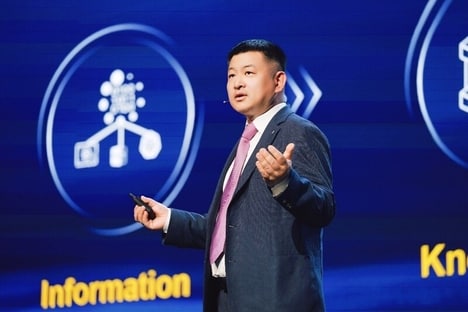

Huawei introduced the Intelligent Computing Platform Service Solution at MWC 2026, a packaged service that helps enterprises plan, build and operate on-premises AI infrastructure, featuring simulation-driven design and model adaptation. The solution is offered globally and targets organisations that need a faster route to deploy large-scale AI workloads.
The platform combines site design, on-site construction support and cluster deployment tools, with simulation for power, liquid cooling and cabling planning to shorten build timelines. Huawei said it has adapted more than 150 mainstream AI models and stored deployment know-how in a knowledge base to speed optimisation. The company also highlighted related AI-native operations software and an agent-to-agent protocol unveiled at the event.
For enterprises, the offering promises faster time to live for AI services, reduced construction and tuning effort and more predictable cluster performance. By compressing deployment cycles and bundling model adaptation, the service addresses a growing demand for turnkey infrastructure in AI-driven business projects.
Image Credit: Huawei
Key Themes Behind This Trend
- Turnkey AI Infrastructure Services
- Enterprises gain access to packaged, end-to-end offerings that compress deployment timelines and bundle hardware, software and model adaptation into a single subscription-like service.
- Simulation-driven Data Center Design
- Physics-based simulation for power, liquid cooling and cabling is enabling predictable build outcomes and smaller margin requirements for bespoke AI clusters.
- Model-adaptation Knowledge Bases
- Centralized repositories of optimized model adaptations and deployment know-how are reducing tuning cycles and enabling repeatable performance across heterogeneous environments.
Where This Applies
- Cloud Service Providers
- Hyperscalers and managed-hosting firms face pressure to offer integrated on-prem and hybrid AI stack solutions that rival vendor-packaged platforms in speed and predictability.
- Financial Services
- Banks and trading firms that rely on low-latency, large-model inference can expect lowered barriers to deploying proprietary AI workloads closer to data sources.
- Telecommunications
- Carriers and edge providers are positioned to support distributed AI workloads by incorporating pre-validated infrastructure modules and agent-to-agent protocols into edge sites.