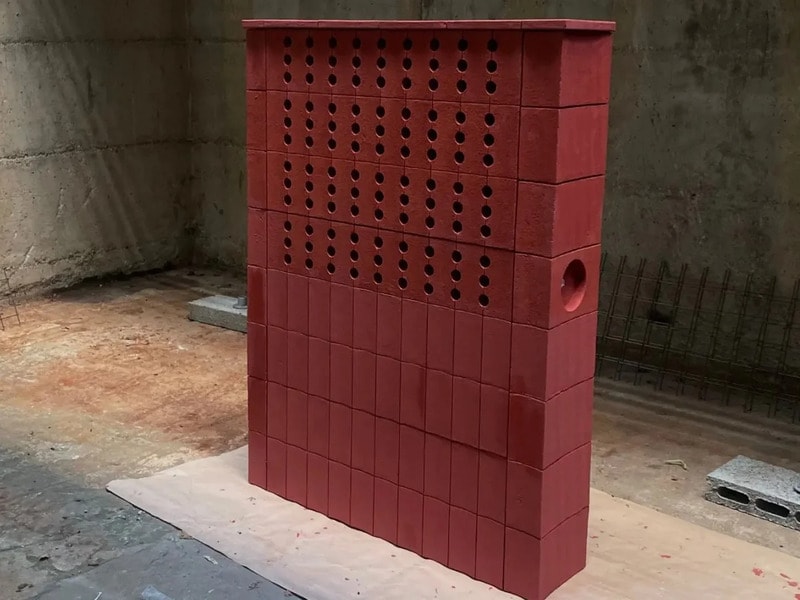
The Celsius is a passive climate-control concept designed by Swiss designer Léo Urbain that uses a large terra-cotta vessel to regulate indoor temperature without conventional HVAC machinery. The system draws from centuries-old evaporative cooling principles, using the porous ceramic body to absorb heat and facilitate airflow through natural convection. Warm air rises through the hollow structure while cooler air is drawn in from below, establishing continuous circulation without mechanical fans or compressors. The thick clay walls act as thermal mass, storing heat during warmer periods and releasing it gradually as temperatures shift.
The sculptural form is intended for architectural integration, positioned within interiors with access to exterior air channels to enable exchange. Its operation relies on material properties rather than electricity-intensive components, reducing energy demand.
Image Credit: Salla Vallotton
What's Driving This Trend
- Passive Evaporative Cooling
- Offers low-energy indoor temperature regulation through porous ceramic systems that reduce reliance on mechanical HVAC and electrical consumption.
- Material-based Thermal Regulation
- Highlights opportunities in leveraging thermal mass and phase-change properties of clay and composites to store and release heat for diurnal temperature control.
- Architectural-integrated Climate Sculpture
- Points to multifunctional design objects that combine aesthetic form with ventilation channels and exterior air integration for seamless climate control.
Who This Affects Most
- Residential Architecture
- Could see demand for built-in, low-maintenance passive cooling elements that enable off-grid or reduced-energy climate comfort in homes.
- Commercial Real Estate
- Commercial buildings may benefit from sculptural passive systems that lower operating costs and improve sustainability metrics for tenants and owners.
- Sustainable Building Materials
- Manufacturing of engineered ceramics and porous composites could expand to supply scalable, performance-tested components for passive climate systems.