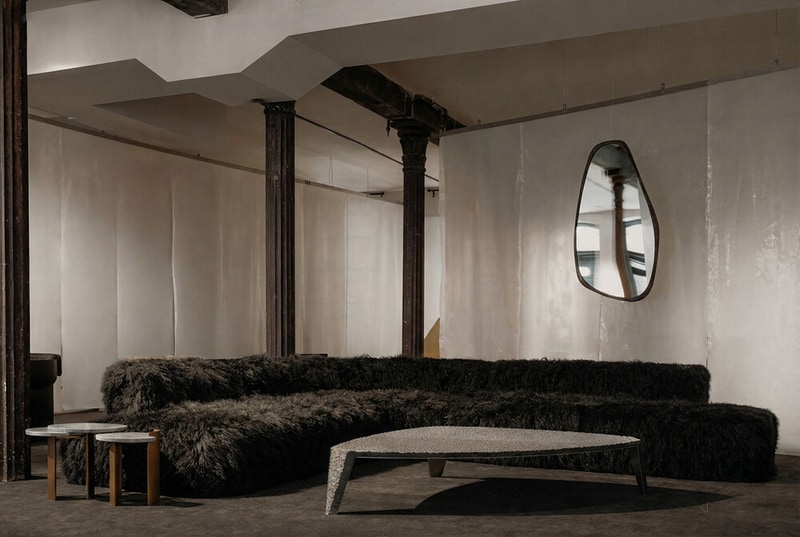
The ATRA FORM New York gallery is a new outpost by Mexican design studio ATRA that presents its collectible furniture and lighting within an immersive exhibition environment in Hudson Square. Designed as a calm interior retreat from the surrounding city, the gallery unfolds as a series of open plan vignettes unified by a dark soil-toned carpet and restrained architectural backdrop. The space brings together the studio’s sculptural furniture pieces, including the Pyramid Chair created with artist Pedro Reyes, the Chronos hanging light sculpture, and the monumental Margot sofa upholstered in Mongolian sheep fur.
The installation is conceived as a laboratory for spatial experimentation where furniture functions as part of a broader architectural system. Visitors encounter seating, lighting, and tables arranged as composed interior scenes rather than isolated objects. Several pieces can also incorporate Morphus biohacking technology, a system that monitors a user’s vitals and uses vibration, sound, and light to guide relaxation and meditation.
Image Credit: ATRA
What Makes This Trend Stand Out
- Multisensorial Retail Environments
- Retail spaces that layer sound, light, scent and tactile materials to create immersive brand narratives could redefine consumer expectations for in-person discovery and dwell time.
- Biohacking-integrated Furniture
- Products embedding sensors and actuators to monitor vitals and deliver personalized vibration, light and audio feedback point to a new category of furniture that blends health monitoring with domestic comfort.
- Spatial-object Convergence
- The framing of furniture as part of composed spatial vignettes rather than isolated pieces signals a shift toward integrated systems where objects, surfaces and architecture operate as a unified design language.
Sectors Adopting This
- Interior Design and Architecture
- Design firms that conceive rooms as experiential laboratories could catalyze new service models centered on multisensory choreography and long-term spatial subscriptions.
- Furniture Manufacturing
- Manufacturers combining artisanal materials with embedded electronics and modularity may disrupt conventional product lifecycles by offering adaptive objects that evolve with user needs.
- Wellness Tech and Wearables
- Companies developing unobtrusive biosensing and feedback systems for nonmedical environments stand to broaden the market for ambient wellness interventions beyond traditional wearable devices.