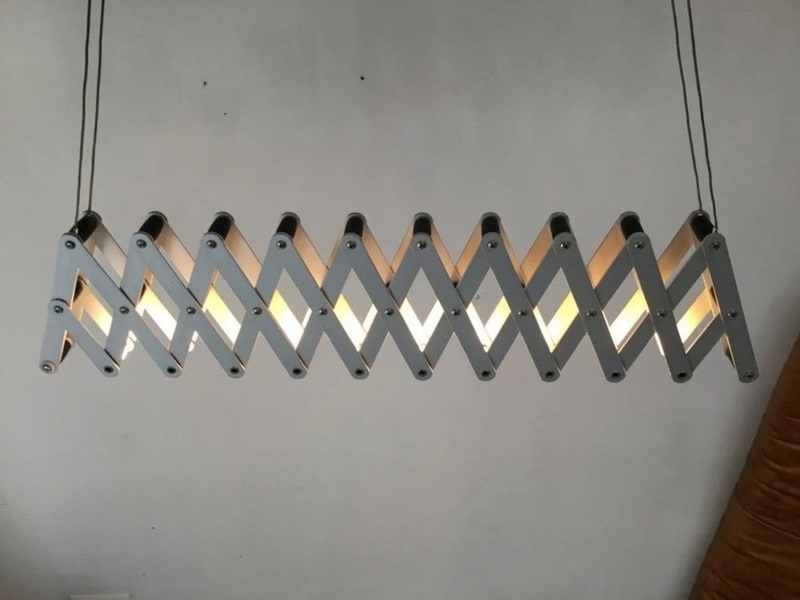
The Architect’s Lamp by Oliver Michl is a ceiling-mounted lighting system from the 1980s that uses a scissor-like expanding mechanism based on drafting tools. The structure is constructed from steel and aluminum and can extend both vertically and horizontally, with height adjustable from approximately 41 to 79 inches and width from 41 to 60 inches. The design is suspended overhead, positioning it as an ambient lighting source rather than a task lamp.
The lamp’s structure is composed of interconnected arms that expand and contract in a grid formation, allowing the overall span to shift through manual adjustment. This mechanism changes both the reach of the fixture and the distribution of light across the space. The piece is produced as a single suspended unit, with the adjustable frame defining how the light is positioned and dispersed. The lamp is constructed using industrial materials and maintains its original mechanical system across configurations.
Image Credit: Lucelab
Why This Trend Is Growing
- Kinetic Adjustable Lighting
- The rise of mechanically adjustable luminaires enables dynamic control of spatial illumination and offers potential for fixtures that physically reconfigure to optimize ambiance and energy use.
- Modular Scissor-mechanisms
- Interlinked scissor-style frameworks are emerging as scalable structural modules that could allow customizable spans and shapes for adaptable architectural elements.
- Retro-industrial Revival
- Nostalgic designs using steel and aluminum hardware are influencing contemporary aesthetics and present opportunities for heritage-inspired products with modern performance upgrades.
Industries Being Reshaped
- Architectural Lighting
- Ceiling-mounted expandable fixtures are shifting design priorities toward integrated form-and-function solutions that can modify light distribution without altering electrical layouts.
- Commercial Interiors
- Open-plan offices and hospitality spaces are demonstrating demand for overhead systems that can adapt scale and mood, enabling more flexible spatial programming.
- Smart Building Systems
- Connected control platforms paired with movable structural fixtures could enable coordinated adjustments between mechanical position and automated lighting scenes for responsive environments.