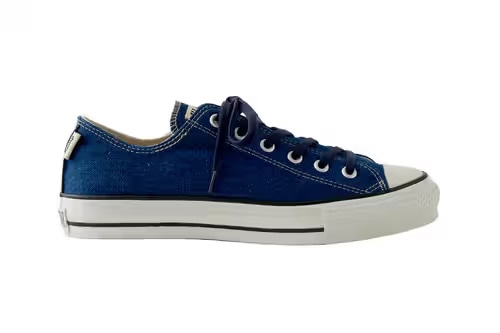
Converse and Gramicci introduce the All Star J Hemp Denim OX in a navy colorway. The model is based on the Made-in-Japan All Star J silhouette and incorporates a Japanese-produced hemp-blend denim upper. The material is composed of 82% cotton and 18% hemp and is finished with a washed treatment that gives the fabric a worn-in texture. The design references Gramicci’s outdoor heritage and its use of natural-fibre materials.
The sneaker features Gramicci branding placed on the heel patch, tongue, and insole, along with matte silver eyelets and natural canvas tape detailing. It uses an 1980s-inspired last shape connected to Gramicci’s founding era and maintains a standard All Star J construction base. The shoe is produced in Japan as part of Converse’s premium domestic line and emphasizes material experimentation within a classic sneaker silhouette. The release is scheduled for May 14, 2026 with a retail price of ¥26,400.
Image Credit: Gramicci, Converse
Key Themes Behind This Trend
- Hemp-blended Textiles
- The rise of hemp-cotton blends for footwear uppers points to new material formulations that combine sustainability with enhanced durability and unique worn-in aesthetics.
- Heritage-brand Collaborations
- Collaborations between legacy brands and outdoor-label partners are creating hybrid products that merge archival silhouettes with functional, nature-focused storytelling.
- Premium Domestic Production
- An emphasis on made-in-country premium lines signals opportunities for localized, high-quality manufacturing models that differentiate products through provenance and craftsmanship.
Where This Applies
- Footwear
- Sneaker design and production can be disrupted by integrating sustainable natural-fiber fabrics and heritage design cues to command premium pricing and niche consumer loyalty.
- Apparel-manufacturing
- Manufacturing workflows that adapt to blended-fiber denim treatments and washed finishes suggest new equipment and process innovation potential for mid-size ateliers.
- Sustainable-materials Supply Chain
- Supply chains focused on hemp cultivation, processing, and fiber blending could unlock vertically integrated models that reduce costs and increase traceability for eco-conscious brands.