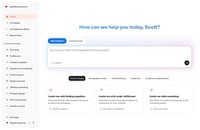

Zip’s AI-powered procurement platform helped large enterprises compress buying cycles and unlock major savings across their indirect spend. Used by brands such as AMD, Anthropic, Coinbase, Reddit, and Sephora, the system centralizes purchase intake, approvals, and vendor interactions while layering automation over legacy workflows. Zip reported more than $6 billion in cumulative customer savings as companies leaned on the software to govern complex supplier ecosystems and reduce manual review.
The platform relied on AI agents to handle routine procurement work, from routing purchase requests to the right approvers to checking invoices against contracted terms. Zip also surfaced pricing benchmarks, negotiation cues, and embedded a cross-system assistant to search procurement data in context. In 2025 alone, customers completed 26 million approvals on Zip and received 10 million AI-driven insights, spanning activity with roughly 7 million suppliers and hundreds of billions in managed spend. Case studies included Dollar Tree, which boosted oversight of non-product spend and dramatically cut cycle times while spotting nine-figure savings opportunities.
For procurement, finance, and IT leaders, Zip’s growth underscored how AI is reshaping indirect spend management, where fragmented tools and policy gaps have historically slowed purchasing. By standardizing decisions, automating compliance checks, and exposing savings earlier in the process, platforms like Zip gave teams a clearer line of sight into risk and value without expanding headcount. This shift aligned with a broader B2B trend: enterprises are experimenting with specialized AI agents not just for analytics, but to execute operational tasks in high-volume, rules-heavy domains such as purchasing, vendor risk, and contract governance.
Image Credit: Zip
Key Themes Behind This Trend
- AI-powered Procurement Automation
- Advancements in AI-powered procurement technologies are transforming indirect spend management by minimizing manual intervention and uncovering savings opportunities previously hindered by fragmented tools.
- Automated Spend Controls
- As AI agents become integral to spend control dynamics, enterprises are increasingly able to streamline purchasing processes and enforce compliance through real-time data analytics and automatic approvals.
- AI in Supplier Management
- Businesses leveraging AI for supplier management stand to revolutionize their operations, gaining deep insights into vendor interactions and reducing spend cycle times with enhanced negotiation capabilities.
Where This Applies
- Enterprise Software
- The enterprise software industry is witnessing rapid transformation as AI-driven procurement platforms optimize indirect spend and enhance operational efficiencies.
- Financial Technology
- Fintech companies are at the forefront of implementing AI solutions that streamline purchasing and compliance, leading to significant financial and operational benefits for enterprises.
- Supply Chain Management
- The supply chain management sector is being disrupted by emerging AI technologies that enhance supplier ecosystem governance and compliance within complex organizational structures.