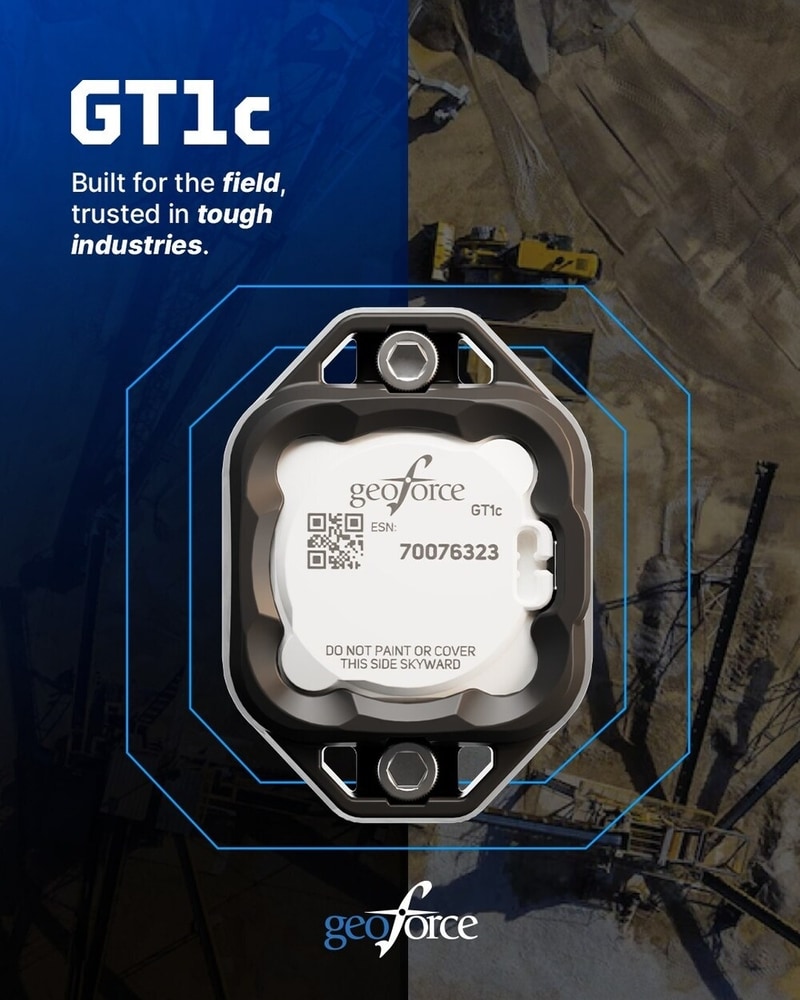
Industrial asset trackers are becoming more scalable as companies seek better visibility across equipment fleets that were previously too costly or difficult to monitor. Geoforce’s new GT1c device uses cellular connectivity and a ruggedized design to support tracking for non-powered industrial assets in sectors such as construction, oil and gas and equipment rental. The tracker delivers long battery life, simplified installation and reliable monitoring in hazardous environments, allowing businesses to expand tracking capabilities across smaller and mid-tier asset classes.
The release highlights how industrial IoT platforms are becoming more accessible for large-scale operational management. Lower hardware and connectivity costs may encourage more businesses to adopt asset intelligence systems to reduce equipment loss, improve utilization rates and streamline field operations. Expanded tracking visibility can also help companies save time, improve maintenance planning and increase operational efficiency across distributed industrial fleets and remote job sites.
Image Credit: Geoforce
What Makes This Trend Stand Out
- Scalable Industrial Iot
- Wider deployment of low-cost trackers enables enterprise-grade visibility across thousands of previously unmonitored assets, creating opportunities for platforms that aggregate and analyze distributed equipment data.
- Cellular-enabled Rugged Trackers
- By leveraging ubiquitous cellular connectivity and hardened hardware, tracking solutions can reliably operate in hazardous and remote environments, opening space for service models built around always-on asset telemetry.
- Extended-battery Asset Electronics
- Long-life power designs permit multi-year deployments without maintenance, which could disrupt ownership and maintenance models through lease- or subscription-based hardware lifecycles.
Sectors Adopting This
- Construction
- Improved real-time location and utilization insights across small and mid-tier tools and equipment can transform job-site logistics and capital planning for builders and contractors.
- Oil and Gas
- Reliable monitoring of non-powered assets at remote wells and sites supports predictive maintenance and inventory assurance that can reduce downtime and regulatory risk.
- Equipment Rental
- Greater tracking fidelity across fleets of rented machines can enable dynamic pricing, loss prevention, and differentiated service tiers based on verified utilization.